Why Ethical AI in Nonprofits Is Critical for Sustainable Growth
 Chinafoundations Team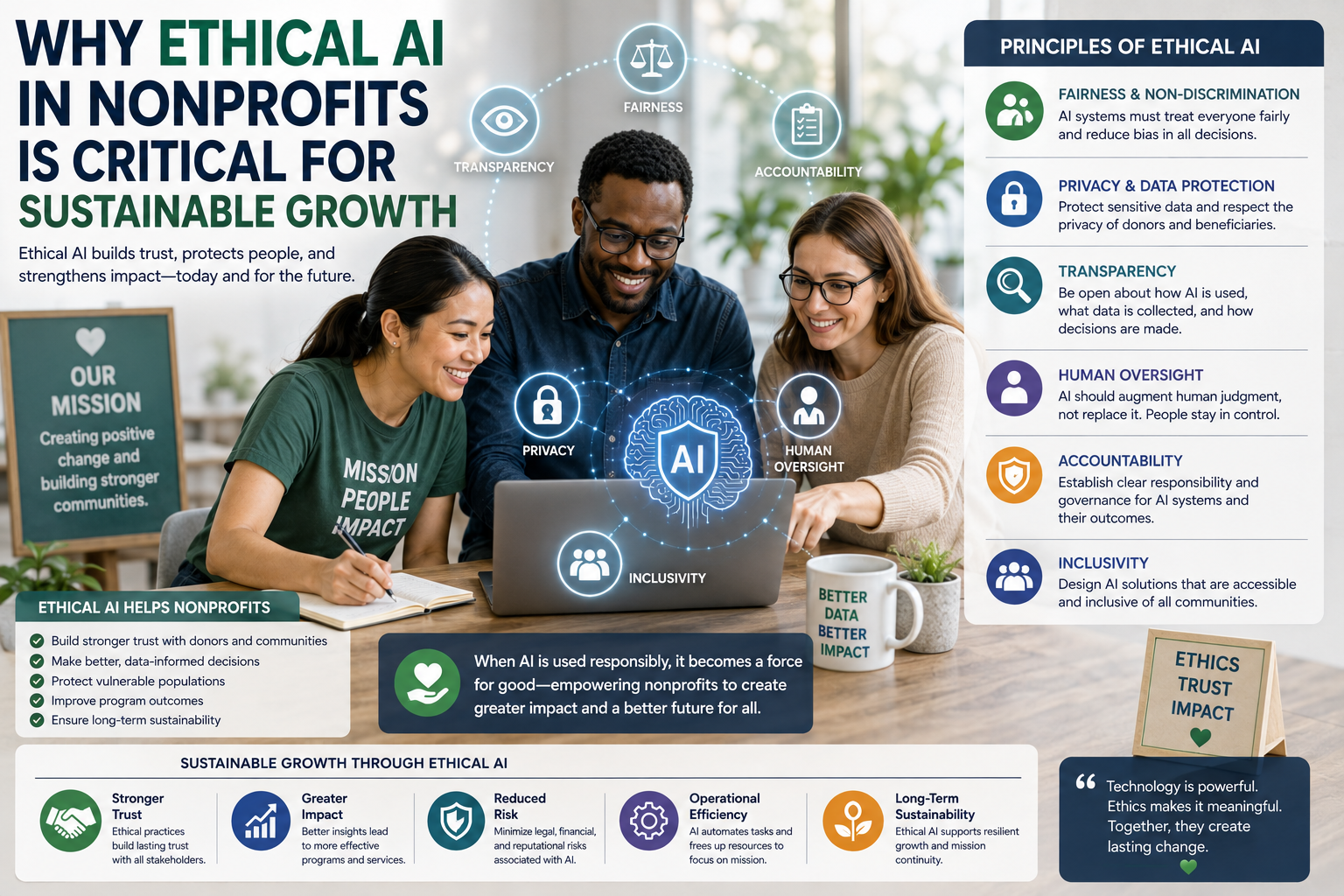
Why Ethical AI in Nonprofits Is Critical for Sustainable Growth - Artificial intelligence is rapidly transforming the nonprofit sector. From donor engagement and fundraising to program evaluation and community outreach, AI-powered tools are helping organizations improve efficiency, reduce administrative burdens, and expand their impact. As nonprofits increasingly adopt AI technologies, they gain access to powerful capabilities that can enhance decision-making, automate routine tasks, and personalize interactions with supporters.
However, the growing use of AI also raises important ethical questions. Nonprofits operate on a foundation of trust, transparency, accountability, and social responsibility. Unlike many businesses that focus primarily on profitability, charitable organizations are expected to serve communities fairly and responsibly while safeguarding the interests of donors, beneficiaries, volunteers, and stakeholders.
For this reason, ethical AI is becoming a critical issue for nonprofit leaders. Organizations that fail to address ethical concerns risk damaging their reputations, losing public trust, and undermining their missions. On the other hand, nonprofits that adopt responsible AI practices can strengthen stakeholder confidence and support long-term sustainable growth.
As AI becomes more deeply integrated into nonprofit operations, understanding the importance of ethical implementation is essential for organizations seeking to maximize both impact and integrity.
Understanding Ethical AI in the Nonprofit Sector
Ethical AI refers to the development and use of artificial intelligence systems in ways that are fair, transparent, accountable, and aligned with human values.
In the nonprofit context, ethical AI involves ensuring that technology supports organizational missions without causing unintended harm.
Key principles of ethical AI include:
- Fairness
- Transparency
- Accountability
- Privacy protection
- Human oversight
- Inclusivity
- Security
- Responsible data use
These principles help ensure that AI systems contribute positively to organizational goals while respecting the rights and dignity of the people they serve.
Ethical AI is not simply a technical issue. It is a governance and leadership challenge that requires thoughtful decision-making throughout the organization.
Why AI Adoption Is Accelerating
The nonprofit sector is increasingly embracing AI because of its potential to improve efficiency and effectiveness.
Organizations use AI for a variety of purposes, including:
- Donor engagement
- Fundraising optimization
- Grant writing
- Program evaluation
- Volunteer management
- Content creation
- Data analysis
- Administrative automation
These tools allow nonprofits to accomplish more with limited resources.
As budgets remain constrained and community needs continue to grow, many organizations view AI as an important resource for achieving greater impact.
However, rapid adoption can create risks if ethical considerations are overlooked.
Trust Is the Foundation of Nonprofit Success
Trust is one of the most valuable assets a nonprofit organization can possess.
Donors contribute because they believe in a mission.
Volunteers dedicate time because they trust the organization.
Communities participate because they believe services will be delivered fairly and responsibly.
When AI systems influence decisions related to fundraising, resource allocation, beneficiary selection, or communication, stakeholders expect those systems to operate ethically.
If an organization cannot explain how AI is being used or if AI produces unfair outcomes, trust can quickly erode.
Once public confidence is lost, rebuilding it can be extremely difficult.
Ethical AI helps preserve and strengthen this trust by ensuring technology aligns with organizational values.
Protecting Donor Privacy
Nonprofits collect significant amounts of donor information.
This data may include:
- Names
- Contact details
- Donation history
- Communication preferences
- Financial information
- Event participation records
AI systems often rely on large datasets to generate insights and recommendations.
Without proper safeguards, donor information could be exposed, misused, or handled in ways that violate privacy expectations.
Ethical AI practices require organizations to:
- Secure sensitive data
- Limit access to authorized personnel
- Comply with privacy regulations
- Communicate data usage clearly
- Obtain appropriate consent
Protecting donor privacy is essential for maintaining confidence and encouraging long-term support.
Avoiding Bias in Decision-Making
One of the most significant ethical challenges associated with AI is algorithmic bias.
AI systems learn from data. If the underlying data contains biases, the resulting decisions may also be biased.
For nonprofits, this can create serious problems.
Examples may include:
- Unequal distribution of resources
- Biased donor targeting
- Unfair grant evaluations
- Exclusion of underserved populations
- Discriminatory service recommendations
Even unintentional bias can undermine organizational missions and damage community relationships.
Ethical AI requires ongoing monitoring, testing, and evaluation to identify and address potential biases before they affect outcomes.
Organizations must ensure that technology promotes fairness rather than reinforcing existing inequalities.
Enhancing Transparency
Many AI systems operate as complex algorithms that can be difficult for non-technical users to understand.
This lack of visibility can create concerns among stakeholders.
Donors and beneficiaries increasingly want to know:
- How decisions are made
- What data is being used
- How information is protected
- Whether AI influences organizational activities
Transparency helps answer these questions.
Ethical nonprofits should clearly communicate:
- Why AI is being used
- How it supports the mission
- What safeguards are in place
- How decisions are reviewed
Open communication strengthens accountability and builds confidence in technological innovation.
Maintaining Human Oversight
AI can analyze information faster than humans, but it cannot replace human judgment, empathy, and ethical reasoning.
Nonprofit work often involves complex social issues that require nuanced decision-making.
Examples include:
- Supporting vulnerable populations
- Evaluating community needs
- Responding to crises
- Allocating limited resources
These decisions involve values, emotions, and contextual understanding that AI cannot fully replicate.
Ethical AI frameworks emphasize the importance of human oversight.
Technology should assist decision-makers rather than replace them entirely.
Maintaining human involvement helps ensure that organizational values remain at the center of every decision.
Responsible Fundraising Practices
AI is increasingly used to improve fundraising performance.
Organizations use predictive analytics to:
- Identify potential donors
- Segment audiences
- Personalize outreach
- Forecast giving behavior
While these capabilities can improve efficiency, they also raise ethical considerations.
Nonprofits must avoid:
- Manipulative fundraising tactics
- Excessive donor profiling
- Misleading communications
- Invasive data collection
Ethical fundraising balances effectiveness with respect for donor autonomy and privacy.
Supporters should feel informed and respected rather than targeted or exploited.
Strengthening Accountability
Accountability is a core principle of nonprofit governance.
Organizations are responsible to donors, beneficiaries, regulators, and the public.
As AI becomes more influential, accountability mechanisms become increasingly important.
Nonprofits should establish policies that define:
- Acceptable AI use
- Data governance standards
- Oversight responsibilities
- Risk management procedures
- Ethical review processes
Clear accountability structures help organizations manage AI responsibly and respond effectively when issues arise.
Supporting Mission Alignment
Technology should serve the mission—not the other way around.
Some organizations adopt AI because it is fashionable or widely discussed, rather than because it addresses genuine organizational needs.
Ethical AI implementation begins with mission alignment.
Leaders should ask:
- Does this technology support our goals?
- Will it improve outcomes for beneficiaries?
- Does it align with our values?
- Are potential risks manageable?
AI should enhance mission delivery rather than distract from it.
Organizations that maintain this focus are more likely to achieve sustainable growth.
Promoting Inclusion and Accessibility
Ethical AI also involves ensuring that technology benefits diverse communities.
Nonprofits often serve individuals from different backgrounds, cultures, languages, and socioeconomic groups.
AI systems should be designed to support inclusion rather than create barriers.
Examples include:
- Multilingual communication tools
- Accessibility features for people with disabilities
- Inclusive data collection practices
- Diverse training datasets
By prioritizing accessibility and inclusion, nonprofits can expand their reach and improve service delivery.
Managing Reputational Risk
Public perception plays a major role in nonprofit success.
Negative publicity related to AI misuse can damage organizational credibility.
Potential reputational risks include:
- Data breaches
- Biased decision-making
- Lack of transparency
- Privacy violations
- Inaccurate AI-generated information
Even isolated incidents can have long-lasting consequences.
Ethical AI practices reduce these risks by establishing safeguards before problems occur.
A proactive approach to governance demonstrates responsibility and professionalism.
Building Long-Term Sustainability
Sustainable growth requires more than short-term efficiency gains.
Nonprofits must cultivate strong relationships with stakeholders while maintaining operational resilience.
Ethical AI contributes to sustainability by:
- Strengthening trust
- Improving decision-making
- Protecting organizational reputation
- Supporting transparency
- Enhancing accountability
- Encouraging responsible innovation
Organizations that prioritize ethics are often better positioned to adapt to future challenges and opportunities.
Rather than viewing ethics as a constraint, successful nonprofits recognize it as a strategic advantage.
Developing an Ethical AI Framework
Creating a formal framework can help organizations implement AI responsibly.
Key components may include:
Governance Policies
Establish clear guidelines regarding AI usage, oversight, and accountability.
Data Protection Standards
Define how data is collected, stored, processed, and secured.
Bias Monitoring
Regularly evaluate systems for fairness and equity.
Staff Training
Ensure employees understand ethical principles and AI limitations.
Stakeholder Engagement
Seek input from donors, beneficiaries, volunteers, and community members.
Continuous Evaluation
Review AI performance regularly and update policies as needed.
A structured approach helps organizations maintain consistency and accountability.
The Future of Ethical AI in Nonprofits
AI technologies will continue evolving rapidly.
Future applications may include:
- Advanced fundraising analytics
- Predictive community needs assessments
- Automated program evaluation
- Personalized beneficiary support
- Enhanced impact measurement
As these capabilities expand, ethical considerations will become even more important.
Stakeholders will increasingly expect organizations to demonstrate responsible technology use.
Nonprofits that invest in ethical AI today will be better prepared for future developments.
Conclusion
Ethical AI is critical for sustainable nonprofit growth because it protects trust, promotes fairness, strengthens accountability, and ensures that technology aligns with organizational values. While AI offers tremendous opportunities to improve fundraising, operations, and program delivery, it also introduces risks that must be carefully managed.
Nonprofits have a unique responsibility to serve communities responsibly and maintain public confidence. By prioritizing transparency, privacy protection, human oversight, and inclusivity, organizations can harness the benefits of AI without compromising their missions.
The future of the nonprofit sector will increasingly involve artificial intelligence. The organizations that thrive will not simply be those that adopt the most advanced technologies but those that implement them ethically, responsibly, and in ways that create lasting positive impact for the people and communities they serve.
This content is sponsored by: https://ez96official.com/.