Smart AI Grant Writing Strategies That Help Nonprofits Win More Funding
 Chinafoundations Team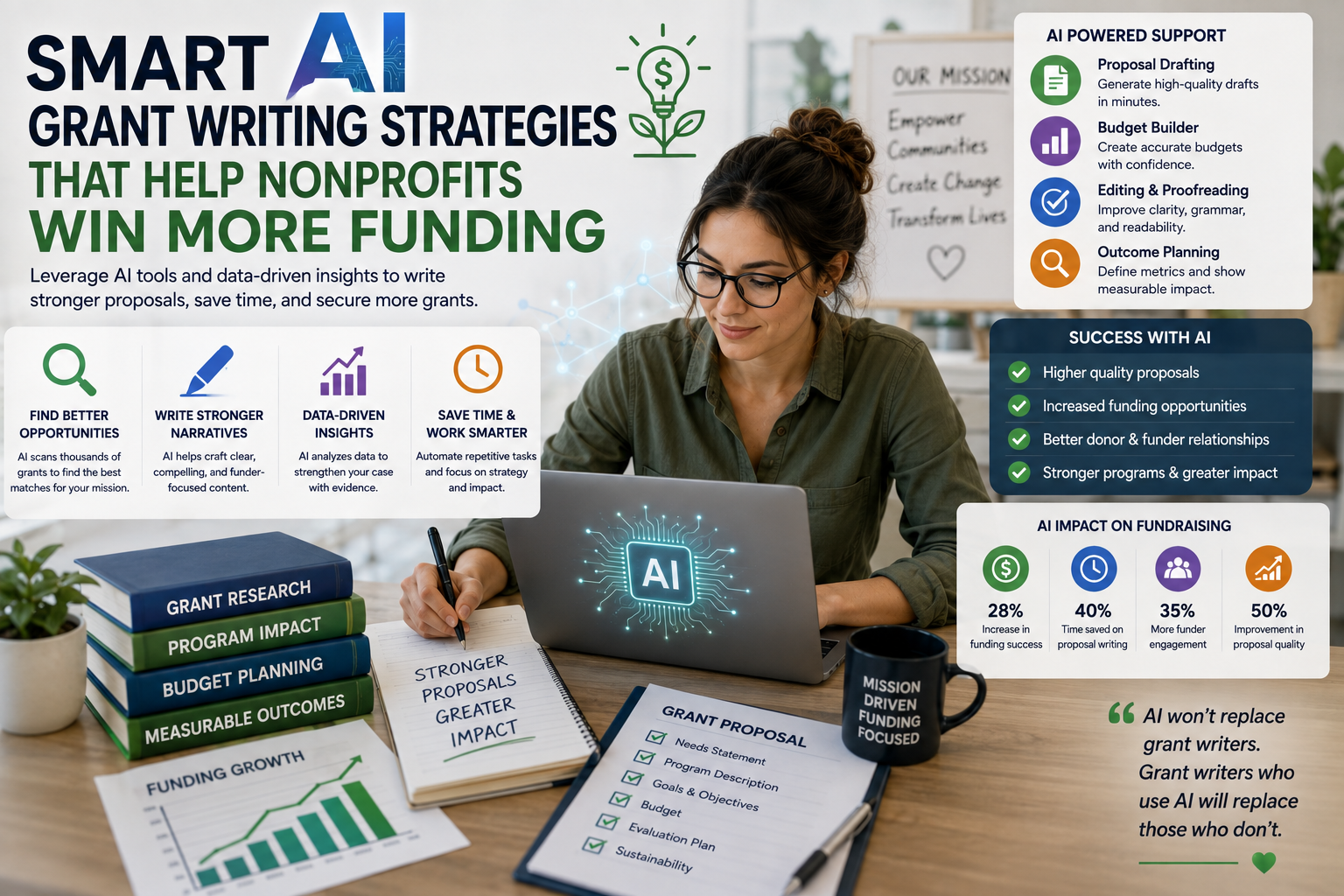
Smart AI Grant Writing Strategies That Help Nonprofits Win More Funding - Grant funding remains one of the most important revenue sources for nonprofit organizations. Foundations, government agencies, corporations, and philanthropic institutions provide billions of dollars annually to support charitable initiatives around the world. However, competition for grants continues to increase as more organizations seek funding for programs addressing social, environmental, educational, and healthcare challenges.
Writing successful AI grant writing proposals has never been easy. Nonprofits must identify suitable opportunities, conduct extensive research, develop compelling narratives, create realistic budgets, and demonstrate measurable impact. These tasks require significant time, expertise, and resources.
Fortunately, advances in artificial intelligence are transforming the grant writing process. AI-powered tools are helping nonprofits streamline research, improve proposal quality, increase efficiency, and ultimately secure more funding. While AI grant writing cannot replace strategic thinking or human relationships, it can significantly enhance the effectiveness of grant development efforts.
Organizations that embrace AI strategically are discovering new ways to compete for funding and strengthen their long-term sustainability.
The Growing Role of AI in Grant Writing
Artificial intelligence has rapidly become a valuable resource across many industries, and the nonprofit sector is no exception.
Modern AI tools can process large amounts of information, generate content, analyze data, identify patterns, and provide recommendations. For grant writers, these capabilities can reduce administrative burdens and improve productivity.
Traditionally, grant development involved many manual tasks, including:
- Researching funding opportunities
- Reviewing eligibility requirements
- Drafting proposal narratives
- Gathering supporting documentation
- Editing and proofreading applications
- Tracking submission deadlines
AI grant writing can assist with each of these activities, allowing nonprofit professionals to focus more time on strategy, relationship building, and program development.
As funding competition continues to intensify, organizations that leverage AI effectively may gain a meaningful advantage.
Why Grant Writing Is Becoming More Challenging
The nonprofit landscape has become increasingly competitive.
Several factors contribute to this trend:
More Organizations Seeking Funding
The number of nonprofits continues to grow globally. As more organizations compete for limited grant resources, funders receive larger volumes of applications.
Higher Expectations from Funders
Grantmakers increasingly demand:
- Detailed impact metrics
- Evidence-based programs
- Strong evaluation plans
- Financial transparency
- Long-term sustainability strategies
Meeting these expectations often requires substantial preparation.
Limited Staff Capacity
Many nonprofits operate with small teams responsible for multiple responsibilities.
Grant writing frequently competes with fundraising, program management, marketing, and community outreach for staff attention.
AI grant writing helps address these challenges by reducing workload and increasing efficiency.
Strategy 1: Use AI to Identify the Best Grant Opportunities
One of the most time-consuming aspects of grant writing is finding suitable funding opportunities.
Many organizations waste valuable time pursuing grants that are poor matches for their mission or eligibility profile.
AI-powered research tools can help nonprofits:
- Analyze funding databases
- Match opportunities to organizational goals
- Identify eligibility requirements
- Track deadlines
- Prioritize high-potential prospects
Rather than manually reviewing hundreds of opportunities, nonprofits can use AI grant writing to narrow their focus to the most relevant options.
This improves efficiency while increasing the likelihood of success.
Strategy 2: Build Stronger Grant Narratives
Grant proposals often succeed or fail based on the quality of their narrative.
Funders want to understand:
- The problem being addressed
- Why the issue matters
- How the organization plans to respond
- Expected outcomes
- Long-term impact
AI writing assistants can help generate first drafts, suggest improvements, and enhance clarity.
These tools are particularly useful for:
- Executive summaries
- Needs statements
- Program descriptions
- Outcome narratives
- Organizational background sections
However, organizations should remember that AI-generated content should always be reviewed and customized.
The most compelling proposals combine AI efficiency with authentic organizational storytelling.
Strategy 3: Improve Needs Assessments with Data Analysis
Funders increasingly expect proposals to be supported by credible data.
A strong needs assessment demonstrates:
- The significance of the problem
- The population affected
- Existing service gaps
- Evidence supporting intervention
AI can help nonprofits analyze:
- Public datasets
- Demographic information
- Community surveys
- Economic indicators
- Research studies
By identifying relevant trends and insights, AI helps organizations create stronger, more evidence-based arguments.
This can significantly improve proposal credibility.
Strategy 4: Personalize Proposals for Each Funder
One common grant writing mistake is submitting nearly identical applications to multiple funders.
Grantmakers want proposals that align with their unique priorities and mission.
AI tools can analyze:
- Funding guidelines
- Previous grant awards
- Strategic priorities
- Public reports
- Foundation websites
These insights help organizations tailor proposals to match each funder's interests.
Personalized applications often perform better because they demonstrate a clear understanding of the grantmaker's goals.
Strategy 5: Streamline Budget Development
Budgets are a critical component of most grant proposals.
Funders want to see realistic financial plans that align with program objectives.
AI-assisted financial tools can help organizations:
- Estimate project costs
- Review budget consistency
- Identify calculation errors
- Compare historical spending patterns
- Generate budget explanations
These capabilities reduce the risk of mistakes while improving overall proposal quality.
A well-constructed budget can strengthen funder confidence and improve funding prospects.
Strategy 6: Use AI for Proposal Editing and Quality Control
Even strong proposals can be weakened by:
- Grammar mistakes
- Inconsistent messaging
- Unclear language
- Formatting errors
- Missing information
AI grant writing editing tools can perform comprehensive reviews before submission.
These systems help improve:
- Readability
- Tone
- Clarity
- Structure
- Professionalism
By identifying potential issues early, nonprofits can submit more polished applications.
Professional presentation often influences how reviewers perceive organizational competence.
Strategy 7: Automate Repetitive Writing Tasks
Many grant applications require similar organizational information.
Examples include:
- Mission statements
- Organizational history
- Leadership descriptions
- Program summaries
- Impact statistics
AI can help create reusable content libraries that streamline proposal development.
Rather than rewriting the same information repeatedly, grant writers can quickly adapt existing materials for specific applications.
This reduces workload and improves consistency across submissions.
Strategy 8: Enhance Collaboration Among Team Members
Grant writing often involves input from multiple stakeholders.
Program managers, finance staff, executive directors, and development professionals may all contribute to an application.
AI-supported collaboration tools can help teams:
- Share drafts
- Track revisions
- Manage feedback
- Maintain version control
- Organize supporting documents
Improved collaboration reduces confusion and helps ensure proposals remain aligned with organizational goals.
Efficient teamwork can significantly improve submission quality and timeliness.
Strategy 9: Develop Stronger Outcome Measurements
Funders increasingly prioritize measurable impact.
Organizations must clearly explain how they will evaluate success.
AI can assist with:
- Defining performance indicators
- Tracking outcomes
- Analyzing program data
- Identifying trends
- Generating reports
These capabilities help nonprofits create stronger evaluation plans.
Demonstrating a commitment to measurement and accountability often increases funder confidence.
Strategy 10: Analyze Past Grant Performance
Many nonprofits submit numerous applications each year but fail to systematically analyze results.
AI can evaluate historical data to identify patterns such as:
- Successful proposal characteristics
- Common rejection factors
- High-performing funders
- Strong program categories
- Effective messaging strategies
These insights allow organizations to refine future applications.
Continuous improvement is essential for long-term grant success.
AI and Grant Prospecting
Beyond writing assistance, AI is transforming grant prospecting.
Advanced systems can monitor:
- New funding announcements
- Foundation activities
- Government opportunities
- Corporate giving programs
Rather than manually searching multiple sources, nonprofits can receive automated alerts for relevant opportunities.
This allows organizations to respond quickly and maintain a consistent pipeline of funding prospects.
Early preparation often improves proposal quality and competitiveness.
Balancing AI Grant Writing and Human Expertise
Although AI offers substantial benefits, successful grant writing still requires human judgment.
AI cannot fully replace:
- Strategic planning
- Relationship building
- Community knowledge
- Program expertise
- Organizational vision
The most effective approach combines technology with human insight.
Grant writers should view AI as a supportive tool rather than a substitute for professional expertise.
Funders ultimately invest in people, missions, and demonstrated impact—not algorithms.
Common Mistakes to Avoid
When implementing AI in grant writing, nonprofits should avoid several common pitfalls.
Overreliance on AI
Submitting entirely AI-generated proposals without review can result in generic content that lacks authenticity.
Ignoring Funder Guidelines
Even the best AI tools cannot replace careful attention to application requirements.
Using Outdated Information
Organizations must verify all facts, statistics, and references included in proposals.
Neglecting Human Relationships
Strong relationships with funders remain critical for long-term success.
Technology should support relationship-building efforts rather than replace them.
Failing to Train Staff
Organizations should invest in training to ensure team members understand how to use AI effectively and responsibly.
Future Trends in AI Grant Writing
AI technology continues to evolve rapidly.
Several emerging trends are expected to shape the future of grant development:
- Automated grant opportunity matching
- Predictive funding analytics
- Advanced proposal scoring
- Real-time compliance checking
- Enhanced impact forecasting
- Personalized funder recommendations
These innovations may further improve nonprofit efficiency and competitiveness.
As AI tools become more sophisticated and accessible, organizations of all sizes will be able to benefit from advanced grant development capabilities.
Why AI Matters for Nonprofit Sustainability
Grant funding often plays a crucial role in nonprofit sustainability.
Organizations that consistently secure funding can:
- Expand programs
- Serve more beneficiaries
- Hire additional staff
- Invest in innovation
- Strengthen long-term impact
AI helps nonprofits compete more effectively for these resources.
By reducing administrative burdens and improving proposal quality, AI allows organizations to focus more energy on mission-driven work.
This combination of efficiency and effectiveness can create significant advantages in an increasingly competitive funding environment.
Conclusion
Artificial intelligence is transforming grant writing by helping nonprofits identify opportunities, improve proposal quality, strengthen data analysis, streamline workflows, and enhance collaboration. Organizations that embrace smart AI grant writing strategies can reduce administrative workloads while increasing their chances of securing funding.
However, technology alone is not enough. Successful grant development still depends on compelling storytelling, strong programs, measurable impact, and meaningful relationships with funders. The most effective nonprofits use AI as a strategic partner that supports human expertise rather than replacing it.
As funding competition continues to grow, nonprofits that combine innovative technology with thoughtful grant development practices will be better positioned to win more funding and expand their positive impact on the communities they serve.