How Climate Action Donations Are Driving Meaningful Environmental Change
 Chinafoundations Team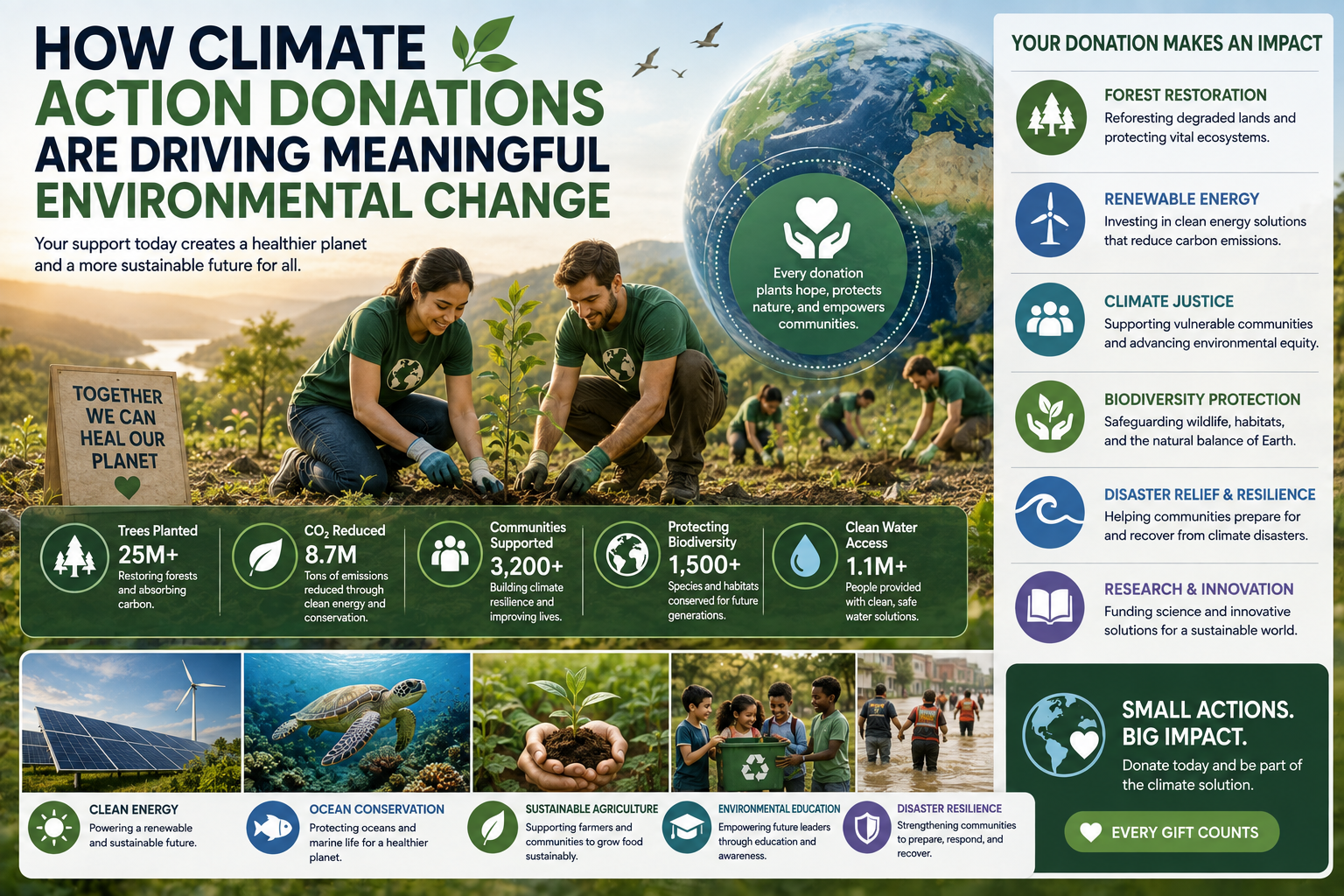
How Climate Action Donations Are Driving Meaningful Environmental Change - Climate change has become one of the defining challenges of the twenty-first century. Rising global temperatures, extreme weather events, biodiversity loss, deforestation, ocean pollution, and water scarcity are affecting communities and ecosystems across the world. Governments, businesses, scientists, and nonprofit organizations are all working to address these challenges, but financial resources remain a critical factor in determining the speed and scale of environmental progress.
In recent years, climate action donations have emerged as a powerful force supporting environmental initiatives worldwide. Individuals, corporations, foundations, and philanthropic organizations are increasingly directing funds toward projects that combat climate change, protect natural ecosystems, and promote sustainable development. These contributions are helping nonprofit organizations implement innovative solutions, expand conservation efforts, and strengthen climate resilience in vulnerable communities.
As awareness of environmental issues continues to grow, climate-focused philanthropy is becoming an increasingly important component of global climate action. Donations are not only providing financial support but also accelerating innovation, encouraging collaboration, and empowering communities to participate in environmental stewardship.
The Growing Importance of Climate Action Donations
The scale of climate-related challenges requires substantial investment.
While governments allocate significant resources toward climate initiatives, public funding alone is often insufficient to address the complexity and urgency of environmental problems. Nonprofit organizations frequently fill critical gaps by developing local solutions, conducting research, restoring ecosystems, and supporting vulnerable populations.
Climate action donations provide these organizations with resources needed to:
- Protect natural habitats
- Restore forests
- Support renewable energy projects
- Reduce carbon emissions
- Promote sustainable agriculture
- Advance environmental education
- Strengthen disaster preparedness
As climate concerns become more visible, donors increasingly view environmental giving as a meaningful way to create positive change.
Why More Donors Are Supporting Climate Causes
Several factors are driving increased interest in climate-related philanthropy.
Greater Public Awareness
Climate issues receive extensive media coverage, scientific attention, and public discussion.
People around the world are witnessing the effects of:
- Heat waves
- Flooding
- Wildfires
- Droughts
- Coastal erosion
- Biodiversity decline
These experiences have increased awareness of environmental risks and inspired more individuals to support climate-focused organizations.
Growing Concern for Future Generations
Many donors view climate giving as an investment in the future.
Environmental challenges affect not only current populations but also future generations who will inherit the consequences of today's decisions.
By supporting climate initiatives, donors contribute to long-term sustainability and environmental protection.
Increased Corporate Engagement
Businesses are increasingly incorporating environmental responsibility into their operations.
Many companies now support climate action through:
- Corporate donations
- Sustainability partnerships
- Employee giving programs
- Environmental grants
- Carbon reduction initiatives
Corporate philanthropy has become an important source of funding for climate-related projects.
Supporting Reforestation and Ecosystem Restoration
One of the most visible impacts of climate action donations is support for reforestation efforts.
Forests play a critical role in addressing climate change because they absorb carbon dioxide from the atmosphere and support biodiversity.
Many nonprofit organizations use donated funds to:
- Plant native trees
- Restore degraded forests
- Protect endangered habitats
- Prevent deforestation
- Improve watershed health
Healthy forests provide numerous environmental benefits, including cleaner air, improved water quality, and enhanced carbon storage.
Large-scale restoration projects funded through charitable contributions are helping rebuild ecosystems that have been damaged by human activity and natural disasters.
Protecting Biodiversity
Climate change and habitat destruction threaten countless plant and animal species.
Biodiversity is essential for maintaining healthy ecosystems and supporting human well-being.
Climate action donations help fund conservation programs that:
- Protect endangered species
- Preserve wildlife habitats
- Support ecological research
- Combat illegal wildlife trafficking
- Restore critical ecosystems
These efforts contribute to environmental resilience and help maintain ecological balance.
Protecting biodiversity is not only an environmental goal but also an important strategy for supporting food security, public health, and economic stability.
Advancing Renewable Energy Projects
Transitioning away from fossil fuels is widely recognized as a key component of climate action.
Renewable energy technologies such as solar, wind, hydroelectric, and geothermal power offer cleaner alternatives that reduce greenhouse gas emissions.
Climate-focused donations support renewable energy initiatives by funding:
- Community solar programs
- Clean energy research
- Energy access projects
- Sustainable infrastructure
- Educational campaigns
In many underserved communities, philanthropic funding helps provide access to renewable energy solutions that improve quality of life while reducing environmental impact.
Supporting Climate Justice
Climate change does not affect all communities equally.
Many vulnerable populations experience disproportionate impacts despite contributing relatively little to global emissions.
Climate action donations increasingly support climate justice initiatives that focus on:
- Low-income communities
- Indigenous populations
- Small island nations
- Rural communities
- Climate refugees
These programs help communities adapt to environmental challenges while addressing social and economic inequalities.
Climate justice recognizes that environmental solutions should also promote fairness and equity.
Strengthening Disaster Preparedness and Resilience
Extreme weather events are becoming more frequent and severe in many regions.
Floods, hurricanes, wildfires, and droughts can cause devastating human and economic losses.
Climate action donations help organizations strengthen resilience through:
- Emergency preparedness programs
- Community education
- Infrastructure improvements
- Early warning systems
- Disaster recovery support
These initiatives reduce vulnerability and help communities recover more quickly after climate-related events.
Investing in resilience often saves resources by preventing future damage and reducing long-term recovery costs.
Promoting Sustainable Agriculture
Agriculture both contributes to and is affected by climate change.
Unsustainable farming practices can increase emissions, degrade soil, and reduce biodiversity.
Climate-focused philanthropy supports sustainable agriculture by funding:
- Regenerative farming practices
- Soil conservation programs
- Water management initiatives
- Farmer education
- Climate-resilient crops
These efforts help improve food security while reducing environmental impacts.
Sustainable agricultural practices also strengthen rural economies and enhance long-term ecosystem health.
Funding Climate Research and Innovation
Scientific research plays a crucial role in understanding climate challenges and developing solutions.
Many climate innovations depend on financial support during early stages of development.
Climate action donations contribute to:
- Environmental research
- Technology development
- Climate modeling
- Carbon capture innovation
- Sustainable materials research
By supporting scientific advancement, donors help accelerate the discovery of effective solutions that can be implemented at larger scales.
Innovation remains one of the most powerful tools for addressing complex environmental problems.
Encouraging Environmental Education
Education is essential for creating lasting environmental change.
People are more likely to adopt sustainable behaviors when they understand environmental issues and their potential solutions.
Donations help fund educational initiatives such as:
- School programs
- Community workshops
- Youth leadership development
- Public awareness campaigns
- Environmental training programs
These efforts empower individuals and communities to participate actively in climate action.
Educated citizens are often better equipped to make informed decisions that support sustainability.
Supporting Ocean Conservation
Oceans play a vital role in regulating Earth's climate.
Marine ecosystems absorb significant amounts of carbon dioxide and support global biodiversity.
However, oceans face numerous threats, including:
- Pollution
- Overfishing
- Habitat destruction
- Rising temperatures
- Ocean acidification
Climate action donations help support:
- Marine protected areas
- Coral reef restoration
- Coastal conservation
- Sustainable fisheries
- Ocean research
Protecting marine ecosystems contributes to both climate mitigation and biodiversity conservation.
The Role of Technology in Climate Giving
Digital platforms have made environmental philanthropy more accessible than ever.
Donors can now support climate initiatives through:
- Online fundraising campaigns
- Crowdfunding platforms
- Mobile donation apps
- Peer-to-peer fundraising
- Social media campaigns
Technology has increased transparency by allowing donors to track project outcomes and understand how contributions are being used.
This accessibility encourages broader participation in climate philanthropy.
Corporate Climate Philanthropy
Many companies recognize that environmental sustainability is important for long-term business success.
Corporate climate philanthropy often includes:
- Environmental grants
- Employee matching programs
- Carbon reduction initiatives
- Conservation partnerships
- Sustainability investments
Businesses can leverage financial resources, expertise, and networks to support large-scale environmental projects.
These partnerships often amplify the impact of charitable contributions.
Measuring the Impact of Climate Donations
Donors increasingly want evidence that their contributions are producing meaningful results.
Many environmental organizations now use data-driven approaches to measure impact.
Common indicators include:
- Trees planted
- Acres restored
- Carbon emissions reduced
- Renewable energy generated
- Species protected
- Communities served
Impact measurement helps improve accountability and transparency while demonstrating the value of environmental giving.
Organizations that communicate results effectively often build stronger donor trust and engagement.
Challenges Facing Climate Philanthropy
Despite significant progress, climate philanthropy faces several challenges.
Scale of the Problem
Climate change is a global issue requiring substantial resources and coordinated action.
Funding Gaps
Many environmental initiatives remain underfunded compared to the scale of need.
Measuring Long-Term Outcomes
Environmental impacts often develop over extended periods, making evaluation complex.
Balancing Priorities
Organizations must determine how to allocate resources among mitigation, adaptation, conservation, and justice initiatives.
Addressing these challenges requires continued innovation and collaboration.
The Future of Climate Action Donations
Climate philanthropy is expected to continue growing as environmental concerns become increasingly urgent.
Future trends may include:
- Increased climate-focused giving
- Greater emphasis on climate justice
- Expanded support for renewable energy
- Growth in community-led solutions
- Increased use of technology for impact tracking
- Stronger cross-sector partnerships
As donors become more informed and engaged, climate action donations are likely to play an even larger role in driving environmental progress.
Conclusion
Climate action donations are helping shape a more sustainable future by funding conservation, renewable energy, environmental education, climate justice initiatives, and innovative solutions to pressing ecological challenges. These contributions provide critical resources that enable nonprofit organizations, researchers, and communities to take meaningful action against climate change.
While the challenges facing our planet remain significant, philanthropic support continues to drive positive environmental outcomes around the world. From restoring forests and protecting biodiversity to advancing clean energy and strengthening community resilience, climate-focused giving is making a measurable difference.
As awareness of climate issues grows, individuals, corporations, and foundations have an opportunity to contribute to lasting environmental change. By supporting effective climate initiatives, donors can help create healthier ecosystems, stronger communities, and a more sustainable world for future generations.