The Ultimate Guide to Sustainable Giving for Long Term Impact
 Chinafoundations Team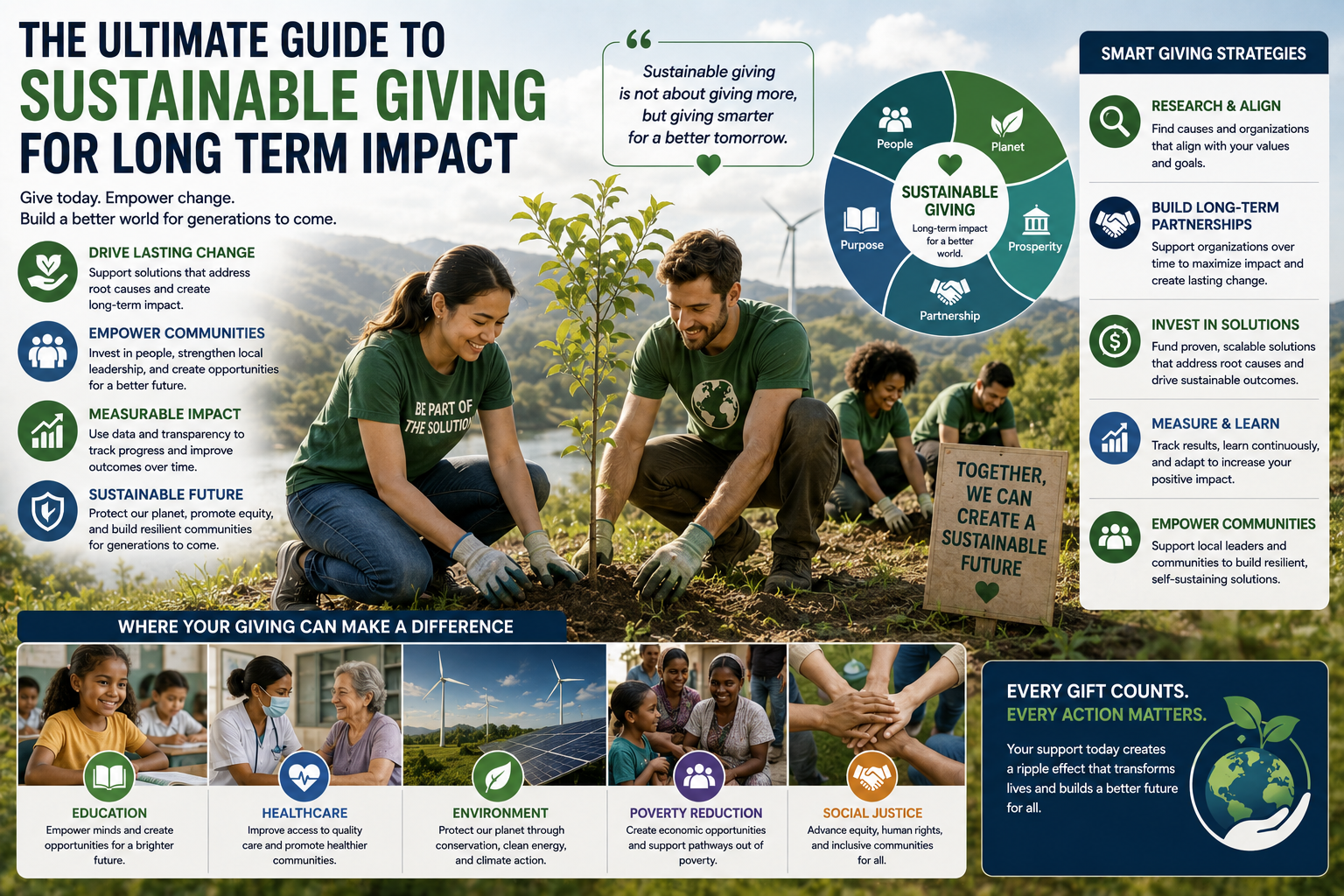
The Ultimate Guide to Sustainable Giving for Long Term Impact - Philanthropy has evolved significantly over the past few decades. While traditional charitable giving remains essential, many donors today are looking beyond one-time contributions and seeking ways to create lasting, measurable change. This shift has given rise to the concept of sustainable giving, an approach that focuses on long-term impact rather than short-term solutions.
Sustainable giving involves strategic philanthropy that supports organizations, communities, and initiatives in ways that generate enduring benefits. Instead of simply addressing immediate needs, sustainable donors aim to tackle root causes, strengthen systems, and empower people to build better futures.
As global challenges such as climate change, poverty, education inequality, healthcare access, and social justice become increasingly complex, sustainable giving has emerged as one of the most effective approaches to creating meaningful change. Understanding how to give strategically can help donors maximize the value of their contributions while supporting solutions that endure for generations.
What Is Sustainable Giving?
Sustainable giving refers to charitable contributions designed to produce long-term positive outcomes.
Rather than focusing solely on immediate relief, sustainable philanthropy emphasizes investments that strengthen communities, improve systems, and create self-sustaining solutions.
Examples of sustainable giving include:
- Funding education programs
- Supporting workforce development
- Investing in environmental conservation
- Providing access to healthcare
- Supporting community leadership initiatives
- Building nonprofit capacity
- Funding research and innovation
The goal is not only to solve current problems but also to reduce future dependence on charitable assistance.
This approach encourages donors to think strategically about how their contributions can generate lasting benefits.
Why Sustainable Giving Matters
Many social and environmental challenges cannot be solved through short-term interventions alone.
For example:
- Food assistance addresses immediate hunger but may not solve underlying economic challenges.
- Disaster relief provides emergency support but may not improve long-term resilience.
- Temporary educational resources help students today but may not strengthen education systems permanently.
Sustainable giving seeks to address root causes while creating opportunities for lasting improvement.
By supporting long-term solutions, donors can help organizations build stronger foundations and achieve greater impact over time.
This approach often produces outcomes that extend far beyond the initial investment.
The Difference Between Traditional and Sustainable Giving
Traditional charitable giving often focuses on immediate needs.
Examples include:
- Emergency food distribution
- Disaster relief donations
- Temporary shelter support
- Crisis response initiatives
These contributions are extremely important and can save lives during emergencies.
However, sustainable giving takes a broader perspective by considering how long-term improvements can prevent or reduce future challenges.
For example:
- Funding agricultural training instead of only providing food
- Supporting affordable housing development rather than temporary accommodation
- Investing in job training programs that promote economic independence
Both approaches play valuable roles, but sustainable giving prioritizes long-term outcomes and systemic change.
Identifying Causes That Align With Your Values
Effective philanthropy begins with understanding personal values and priorities.
Donors should consider:
- Which issues matter most to them?
- What kind of change do they hope to create?
- Which communities do they want to support?
- What outcomes would they like to see?
Common areas of sustainable giving include:
Education
Supporting schools, scholarships, literacy programs, and workforce development initiatives.
Healthcare
Expanding access to medical services, preventive care, and public health education.
Environmental Conservation
Protecting ecosystems, promoting sustainability, and supporting climate solutions.
Poverty Reduction
Creating opportunities for economic mobility and financial independence.
Social Justice
Advancing equity, inclusion, and community empowerment.
Choosing causes that align with personal values increases engagement and commitment over time.
Supporting Strong Nonprofit Organizations
The effectiveness of sustainable giving often depends on the strength of the organizations receiving support.
Before making donations, donors should evaluate:
- Mission clarity
- Leadership quality
- Financial transparency
- Program effectiveness
- Long-term sustainability
- Community impact
Strong nonprofits typically demonstrate:
- Clear goals
- Measurable outcomes
- Responsible governance
- Effective resource management
Supporting well-managed organizations increases the likelihood that contributions will generate meaningful results.
The Importance of Unrestricted Funding
Many donors prefer funding specific projects or programs.
While targeted support can be valuable, unrestricted funding often provides nonprofits with greater flexibility.
Unrestricted donations allow organizations to:
- Respond to emerging needs
- Invest in infrastructure
- Strengthen staff capacity
- Improve technology
- Expand successful programs
These investments can significantly improve organizational effectiveness and long-term sustainability.
Many nonprofit leaders consider unrestricted funding among the most impactful forms of charitable support.
Building Long-Term Partnerships
Sustainable giving is often most effective when donors develop ongoing relationships with organizations.
Long-term partnerships provide several benefits:
- Greater understanding of organizational needs
- Improved communication
- Increased trust
- Enhanced strategic planning
- More consistent funding
Rather than making isolated contributions, donors can support organizations over multiple years.
This stability allows nonprofits to plan confidently and invest in long-term initiatives.
Consistent support often produces greater impact than sporadic donations.
Investing in Capacity Building
Many donors focus primarily on funding programs.
However, nonprofit effectiveness also depends on organizational capacity.
Capacity-building investments may include:
- Staff development
- Leadership training
- Technology upgrades
- Strategic planning
- Financial management systems
- Data collection tools
These improvements help organizations operate more efficiently and achieve better outcomes.
Although capacity-building initiatives may receive less public attention, they often generate substantial long-term benefits.
Supporting Evidence-Based Solutions
Sustainable giving is most effective when informed by evidence.
Donors should look for organizations that:
- Use data to guide decisions
- Measure outcomes regularly
- Evaluate program effectiveness
- Adapt strategies based on results
Evidence-based approaches increase confidence that resources are being used effectively.
Impact measurement also helps organizations identify opportunities for continuous improvement.
Supporting proven solutions can maximize the value of philanthropic investments.
The Role of Impact Investing
Impact investing combines financial returns with positive social or environmental outcomes.
Unlike traditional charitable donations, impact investments seek both measurable impact and financial sustainability.
Examples include investments in:
- Affordable housing
- Renewable energy
- Social enterprises
- Sustainable agriculture
- Community development projects
Impact investing has become increasingly popular among donors seeking innovative approaches to long-term change.
It allows capital to support meaningful initiatives while potentially generating returns that can be reinvested in future philanthropic efforts.
Donor-Advised Funds and Strategic Giving
Donor-advised funds (DAFs) have become an important tool for sustainable philanthropy.
DAFs allow donors to:
- Make tax-deductible contributions
- Invest charitable assets
- Recommend grants over time
- Develop long-term giving strategies
This flexibility enables donors to plan philanthropy more strategically.
Rather than making immediate decisions, donors can evaluate opportunities carefully and support causes consistently over many years.
DAFs are particularly useful for individuals interested in creating lasting charitable impact.
Supporting Community-Led Solutions
Communities often possess valuable knowledge about their own challenges and opportunities.
Sustainable giving increasingly emphasizes community-led approaches that empower local leaders and organizations.
Benefits include:
- Greater cultural relevance
- Improved trust
- Stronger local ownership
- Enhanced long-term sustainability
When communities participate actively in designing and implementing solutions, programs are often more effective and durable.
Supporting local leadership can create lasting change that continues long after external funding ends.
Sustainable Giving and Environmental Impact
Environmental philanthropy has become a major focus area for sustainable donors.
Long-term environmental investments may include:
- Forest restoration
- Climate resilience projects
- Renewable energy initiatives
- Biodiversity conservation
- Sustainable agriculture programs
These efforts address environmental challenges while creating benefits for future generations.
Because environmental issues often require long-term solutions, sustainable giving plays a particularly important role in this sector.
Leveraging Technology for Greater Impact
Technology is transforming philanthropy in numerous ways.
Modern donors can use digital tools to:
- Research nonprofits
- Track impact metrics
- Monitor project outcomes
- Participate in crowdfunding campaigns
- Connect with charitable communities
Technology also helps nonprofits improve transparency and accountability.
Access to real-time information allows donors to make more informed decisions and evaluate the effectiveness of their contributions.
Measuring Long-Term Impact
One of the defining characteristics of sustainable giving is a focus on measurable outcomes.
Donors should consider questions such as:
- What results were achieved?
- How many people benefited?
- Were improvements sustained over time?
- Did programs address root causes?
- Can successful models be scaled?
Impact measurement helps ensure that charitable resources are producing meaningful results.
It also encourages continuous learning and improvement within the nonprofit sector.
Common Mistakes to Avoid
Even well-intentioned donors can make mistakes that limit long-term impact.
Focusing Only on Short-Term Results
Immediate outcomes are important, but sustainable change often requires patience.
Ignoring Organizational Capacity
Strong programs depend on strong organizations.
Overlooking Community Input
Local knowledge is essential for effective solutions.
Prioritizing Low Overhead Costs
Excessive focus on administrative expenses can discourage important investments in organizational effectiveness.
Failing to Measure Impact
Without evaluation, it is difficult to determine whether giving strategies are achieving desired outcomes.
Avoiding these mistakes can significantly improve philanthropic effectiveness.
Future Trends in Sustainable Giving
Several trends are shaping the future of philanthropy.
Data-Driven Decision Making
Donors increasingly rely on evidence and analytics to guide giving.
Collaborative Philanthropy
Groups of donors are pooling resources to address complex challenges.
Climate-Focused Giving
Environmental sustainability continues to attract growing philanthropic attention.
Technology-Enabled Giving
Digital platforms are making philanthropy more accessible and transparent.
Community-Led Philanthropy
More donors are supporting local leadership and participatory decision-making.
These trends reflect a growing emphasis on effectiveness, accountability, and long-term impact.
Creating Your Sustainable Giving Strategy
Developing a sustainable giving plan involves several key steps:
- Define your philanthropic goals.
- Identify priority issue areas.
- Research effective organizations.
- Commit to long-term support.
- Measure outcomes regularly.
- Remain flexible and open to learning.
- Build meaningful partnerships.
A thoughtful strategy helps donors align resources with values while maximizing impact.
Conclusion
Sustainable giving represents a powerful approach to philanthropy that focuses on long-term solutions rather than temporary fixes. By supporting strong organizations, investing in capacity building, embracing evidence-based approaches, and empowering communities, donors can create lasting positive change that extends far beyond individual contributions.
As global challenges continue to evolve, strategic philanthropy will play an increasingly important role in shaping a more equitable, resilient, and sustainable future. Whether supporting education, healthcare, environmental conservation, social justice, or economic development, sustainable giving enables donors to make meaningful investments in people, communities, and systems that generate enduring impact.
Ultimately, the most effective philanthropy is not measured solely by how much is given but by the lasting difference it creates. Through thoughtful planning and a commitment to long-term outcomes, sustainable giving can help build stronger communities and a better future for generations to come.