Top Environmental Charities Making a Global Impact
 Chinafoundations Team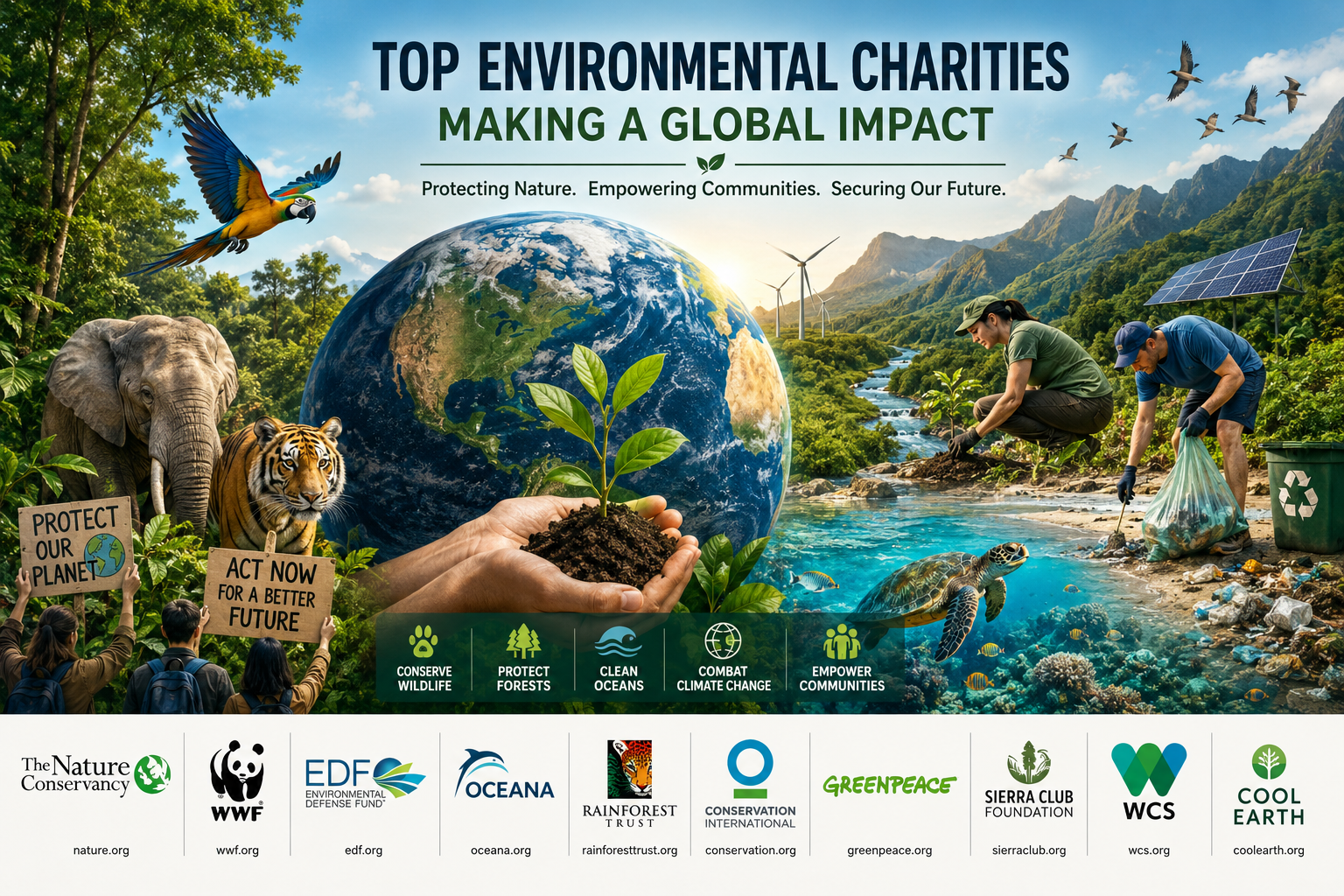
Top Environmental Charities Making a Global Impact - Environmental challenges have become some of the most pressing issues facing humanity in the 21st century. Climate change, biodiversity loss, deforestation, plastic pollution, freshwater scarcity, and habitat destruction threaten ecosystems across the globe. While governments, corporations, and international organizations all play important roles in addressing these challenges, environmental charities often lead the way in driving conservation efforts, protecting vulnerable species, restoring ecosystems, and educating communities.
These organizations work on the front lines of environmental protection, often in regions where resources are limited and ecological threats are greatest. Through scientific research, advocacy, habitat restoration, and community engagement, environmental charities help create lasting solutions that benefit both people and nature.
This article highlights some of the world's most influential environmental charities and explores the impact they are making on a global scale.
Why Environmental Charities Matter
Environmental issues rarely respect national borders. Carbon emissions produced in one country affect the entire planet. Plastic waste discarded in one region can travel thousands of miles through oceans. Similarly, the extinction of species in one ecosystem can disrupt global biodiversity.
Environmental charities help address these challenges by:
- Protecting endangered wildlife
- Preserving forests and marine ecosystems
- Promoting sustainable agriculture
- Supporting renewable energy initiatives
- Educating communities about conservation
- Advocating for stronger environmental policies
Many organizations also work directly with Indigenous and local communities, recognizing that long-term conservation success often depends on local stewardship and sustainable economic opportunities.
1. The Nature Conservancy (TNC)
One of the most respected environmental organizations in the world, The Nature Conservancy focuses on protecting lands, waters, and ecosystems critical to biodiversity and climate resilience. Founded in 1951, the organization now operates in more than 80 countries and territories with a mission to conserve the lands and waters on which all life depends.
The Nature Conservancy is known for its science-based approach to conservation. Rather than focusing solely on advocacy, it often purchases and protects ecologically significant land, restores degraded habitats, and partners with governments and communities to improve conservation outcomes.
Major initiatives include:
- Forest protection and restoration
- Freshwater conservation projects
- Ocean habitat preservation
- Climate change mitigation through natural solutions
- Indigenous land stewardship programs
The organization has set ambitious conservation goals for 2030, including protecting millions of hectares of land and marine ecosystems worldwide.
2. World Wildlife Fund (WWF)
The World Wildlife Fund is among the most recognizable conservation organizations globally. Established in 1961, WWF works in over 100 countries to protect wildlife, combat climate change, and preserve natural habitats. WWF is widely recognized for its efforts to protect iconic species such as tigers, elephants, rhinos, pandas, and sea turtles.
WWF's work extends beyond species conservation. The organization also focuses on:
- Sustainable food systems
- Forest conservation
- Freshwater protection
- Climate action
- Reducing plastic pollution
One of WWF's strengths is its ability to combine scientific research with public awareness campaigns. Through partnerships with governments, businesses, and communities, WWF helps create large-scale environmental solutions that can be replicated globally.
3. Environmental Defense Fund (EDF)
The Environmental Defense Fund takes a unique approach to conservation by combining science, economics, and policy solutions. The organization works with businesses, governments, and local communities to develop practical environmental charities strategies that balance economic growth with ecological sustainability.
EDF focuses heavily on:
- Climate change mitigation
- Methane emissions reduction
- Sustainable fisheries
- Clean energy development
- Air quality improvement
One of EDF's most innovative projects involves using advanced satellite technology to monitor methane emissions worldwide. Since methane is a highly potent greenhouse gas, reducing these emissions can significantly slow global warming.
The organization's collaborative approach has allowed it to influence environmental charities policy and corporate sustainability initiatives across multiple industries.
4. Oceana
Oceana is dedicated exclusively to protecting the world's oceans. Unlike many environmental charities that address a broad range of issues, Oceana focuses specifically on marine conservation.
Its major priorities include:
- Ending overfishing
- Protecting marine habitats
- Reducing ocean pollution
- Preventing destructive fishing practices
- Promoting sustainable seafood
Healthy oceans are essential for regulating the Earth's climate, supporting biodiversity, and providing food for billions of people. Oceana's policy-driven campaigns have helped establish marine protected areas and improve fisheries management in numerous countries.
Because oceans absorb large amounts of atmospheric carbon dioxide, marine conservation efforts also play an important role in combating climate change.
5. Rainforest Trust
Rainforest Trust focuses on one of the most effective conservation strategies available: protecting critical habitats before they are destroyed.
The organization works with local conservation groups to:
- Purchase threatened rainforest land
- Establish protected areas
- Protect endangered species
- Support Indigenous conservation efforts
Rainforests contain some of the world's richest biodiversity while also serving as major carbon sinks. Protecting these ecosystems helps preserve wildlife and reduce greenhouse gas emissions simultaneously.
Rainforest Trust is often praised for its cost-effective conservation model, which emphasizes direct habitat protection and measurable conservation outcomes.
6. Conservation International
Conservation International works at the intersection of environmental charities protection and human well-being. The organization recognizes that healthy ecosystems provide essential services such as clean water, food security, and climate stability.
Its initiatives include:
- Tropical forest conservation
- Coastal ecosystem restoration
- Climate resilience projects
- Sustainable agriculture
- Biodiversity protection
The organization operates in some of the world's most biologically diverse regions, including the Amazon, Southeast Asia, and Africa.
Conservation International frequently collaborates with Indigenous peoples and local communities, helping create conservation solutions that benefit both nature and livelihoods.
7. Greenpeace
Greenpeace is one of the most visible environmental charities advocacy organizations in the world. Founded in 1971, Greenpeace is known for its high-profile campaigns addressing environmental charities threats.
The organization focuses on:
- Climate change
- Deforestation
- Ocean protection
- Plastic pollution
- Renewable energy
- Environmental justice
Greenpeace often uses direct action, public awareness campaigns, and investigative research to draw attention to environmental issues.
While some environmental organizations primarily focus on conservation projects, Greenpeace emphasizes policy change and corporate accountability. This approach has helped drive public conversations around environmental responsibility for decades.
8. Sierra Club Foundation
The Sierra Club Foundation supports conservation programs, environmental education, and advocacy efforts aimed at protecting natural resources.
Key priorities include:
- Clean energy transition
- Public land protection
- Environmental justice
- Climate resilience
- Community engagement
The organization has played a significant role in promoting renewable energy and reducing reliance on fossil fuels across the United States.
Its grassroots network enables local communities to participate directly in conservation and environmental advocacy efforts.
9. Wildlife Conservation Society (WCS)
The Wildlife Conservation Society manages some of the world's most important wildlife conservation programs.
Its work spans:
- Wildlife protection
- Anti-poaching initiatives
- Scientific research
- Protected area management
- Marine conservation
WCS operates in nearly 60 countries and works to conserve some of the planet's most endangered species and ecosystems.
The organization also manages renowned institutions such as the Bronx Zoo, which supports wildlife education and conservation research.
10. Cool Earth
Cool Earth takes a community-centered approach to rainforest conservation. Rather than focusing solely on protected areas, the organization partners directly with Indigenous communities and local populations living in rainforest regions.
Programs often include:
- Sustainable livelihood development
- Forest protection incentives
- Community resilience projects
- Climate adaptation support
This model recognizes that people living in rainforest ecosystems are often the most effective guardians of those environments.
By helping communities improve economic opportunities while preserving forests, Cool Earth promotes long-term conservation success.
What Makes an Environmental Charity Effective?
Not all environmental charities organizations operate in the same way. The most effective charities often share several characteristics:
Clear Mission
Successful organizations focus on specific goals and measurable outcomes rather than attempting to solve every environmental challenge at once.
Scientific Foundation
Evidence-based conservation strategies generally produce better long-term results.
Transparency
Top charities provide detailed reports about finances, conservation outcomes, and project impacts.
Community Involvement
Conservation efforts are often most successful when local communities actively participate in planning and implementation.
Long-Term Vision
Environmental challenges require sustained action over many years. Effective charities develop strategies that create lasting environmental benefits.
The Future of Environmental Philanthropy
Environmental philanthropy is evolving rapidly. Emerging technologies such as satellite monitoring, artificial intelligence, and environmental data analytics are helping organizations track conservation progress more effectively. At the same time, growing public awareness of climate change has increased support for environmental charities causes worldwide.
Many charities are also embracing innovative approaches such as carbon removal projects, regenerative agriculture, blue carbon initiatives, and nature-based climate solutions.
As climate and biodiversity challenges continue to intensify, environmental charities will remain critical players in protecting ecosystems and building a more sustainable future.
Conclusion
The environmental challenges facing our planet are immense, but so is the impact of organizations working to address them. From protecting rainforests and oceans to conserving wildlife and reducing greenhouse gas emissions, environmental charities play a vital role in safeguarding Earth's natural systems.
Organizations such as The Nature Conservancy, WWF, Environmental Defense Fund, Oceana, Conservation International, Greenpeace, and others demonstrate how focused conservation efforts can create meaningful change. Whether through donations, volunteering, advocacy, or education, supporting reputable environmental charities is one of the most effective ways individuals can contribute to a healthier and more sustainable world for future generations.
- Categories
- Philanthropy and Social Impact