ESG Investing Explained: Benefits, Risks, and Future Trends
 Chinafoundations Team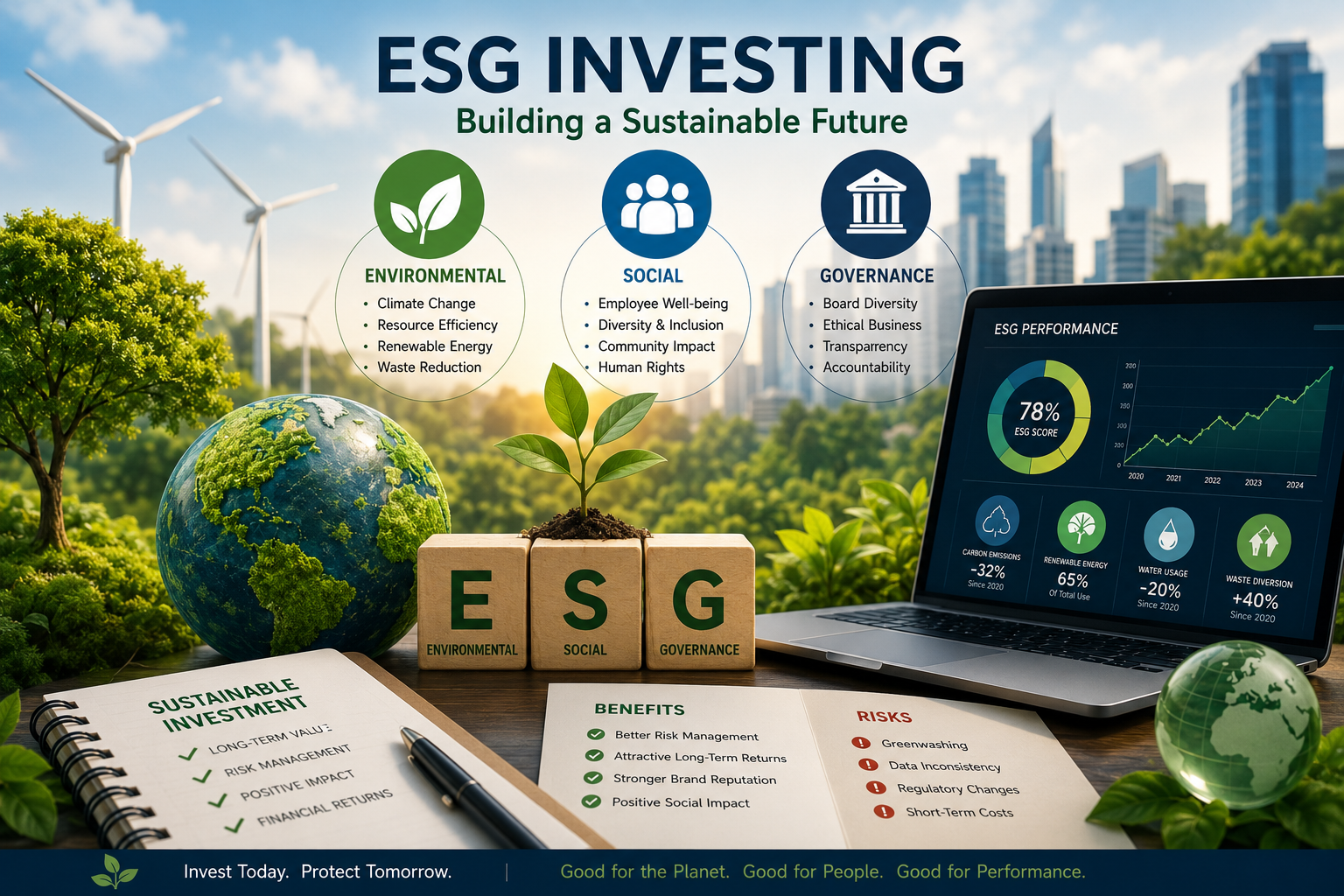
ESG Investing Explained: Benefits, Risks, and Future Trends - Environmental, Social, and Governance (ESG) investing has become one of the most influential trends in modern finance. Once considered a niche strategy for socially conscious investors, ESG investing is now a mainstream approach used by institutional investors, pension funds, asset managers, and individual investors worldwide.
The growing popularity of ESG investing reflects a broader shift in how investors evaluate companies. Financial performance remains important, but many investors also want to understand how businesses manage environmental risks, treat employees and communities, and maintain strong governance practices. The belief is that companies that perform well on ESG factors may be better positioned for long-term success and resilience.
This article explains what ESG investing is, its key benefits and risks, and the future trends shaping the sustainable investment landscape.
What Is ESG Investing?
ESG stands for Environmental, Social, and Governance. ESG investing is an investment strategy that incorporates these non-financial factors alongside traditional financial analysis when evaluating companies and investment opportunities.
The three pillars of ESG include:
Environmental
Environmental criteria examine how a company impacts the natural world and manages environmental risks.
Examples include:
- Carbon emissions
- Renewable energy usage
- Waste management
- Water conservation
- Climate change strategies
- Pollution reduction
- Sustainable sourcing
Investors increasingly view environmental performance as a key indicator of long-term risk management, especially as climate-related regulations and extreme weather events become more common.
Social
The social component focuses on how companies manage relationships with employees, customers, suppliers, and communities.
Key considerations include:
- Employee well-being
- Diversity and inclusion
- Human rights practices
- Workplace safety
- Customer privacy
- Community engagement
- Supply chain standards
Strong social performance can improve brand reputation, employee retention, and customer loyalty.
Governance
Governance evaluates how a company is managed and whether leadership acts in the best interests of shareholders and stakeholders.
Important governance factors include:
- Board independence
- Executive compensation
- Shareholder rights
- Business ethics
- Regulatory compliance
- Transparency
- Anti-corruption policies
Strong governance often reduces operational and reputational risks while improving accountability.
How ESG Investing Works
Traditional investing primarily focuses on financial metrics such as revenue growth, profitability, debt levels, and valuation ratios. ESG investing expands the analysis by examining sustainability-related risks and opportunities that may affect long-term business performance.
Investors may use several ESG strategies:
Negative Screening
This approach excludes companies involved in industries that conflict with specific values or sustainability goals.
Common exclusions include:
- Tobacco
- Fossil fuels
- Weapons manufacturing
- Gambling
- Controversial business practices
Positive Screening
Investors actively seek companies with strong ESG performance relative to their industry peers.
ESG Integration
Many professional investors incorporate ESG factors directly into financial analysis and portfolio construction.
Impact Investing
Impact investing goes beyond ESG screening by targeting investments designed to generate measurable social or environmental benefits alongside financial returns.
These approaches can be used individually or combined depending on an investor's objectives.
Benefits of ESG Investing
1. Improved Risk Management
One of the strongest arguments for ESG investing is its ability to identify risks that may not appear in traditional financial statements.
For example:
- Climate risks may threaten business operations.
- Poor labor practices can damage reputation.
- Weak governance can lead to scandals or regulatory penalties.
By evaluating ESG factors, investors may gain a more complete understanding of potential long-term risks.
2. Long-Term Performance Potential
Many investors believe companies with strong ESG practices are better equipped to adapt to changing regulations, consumer preferences, and economic conditions.
Research and industry surveys continue to show significant investor interest in sustainable investing, with many viewing ESG as a driver of long-term value creation.
3. Alignment with Personal Values
ESG investing allows individuals to align their investment portfolios with causes they care about.
Investors can support companies that prioritize:
- Renewable energy
- Ethical business practices
- Employee welfare
- Diversity and inclusion
- Sustainable supply chains
This alignment can provide a sense of purpose alongside financial objectives.
4. Growing Regulatory Support
Governments and regulators worldwide are introducing new sustainability disclosure requirements.
As ESG reporting becomes more standardized, investors may gain access to better information for decision-making.
5. Rising Consumer Demand
Consumers increasingly prefer brands that demonstrate environmental and social responsibility.
Companies responding to these preferences may gain competitive advantages that support long-term growth.
Risks and Challenges of ESG Investing
Despite its popularity, ESG investing is not without controversy or limitations.
1. Lack of Standardized ESG Ratings
One of the biggest challenges is inconsistency among ESG rating providers.
Different agencies often use different methodologies, leading to varying scores for the same company.
This can make it difficult for investors to compare ESG performance accurately.
2. Greenwashing
Greenwashing occurs when companies exaggerate or misrepresent their environmental or social achievements.
Some businesses market themselves as sustainable without making meaningful operational changes.
Investors must carefully examine company disclosures rather than relying solely on marketing claims.
3. Performance Uncertainty
Although many ESG investments have performed competitively, there is no guarantee that ESG-focused portfolios will consistently outperform traditional investments.
Market conditions, sector exposure, and economic cycles can significantly influence performance.
4. Political and Regulatory Debates
ESG investing has become politically controversial in some regions.
Critics argue that ESG frameworks may prioritize social objectives over shareholder returns, while supporters view ESG as an important risk-management tool.
This ongoing debate creates uncertainty for investors and asset managers.
5. Measuring Real-World Impact
A common criticism is that ESG investing does not always produce measurable environmental or social improvements.
Some investors question whether purchasing shares of publicly traded companies directly contributes to meaningful change. Community discussions frequently distinguish between ESG investing and impact investing, with the latter often having clearer measurable outcomes.
Future Trends in ESG Investing
Climate-Focused Investing
Climate change remains one of the most significant drivers of ESG investment strategies.
Investors are increasingly focusing on:
- Renewable energy
- Carbon reduction technologies
- Clean transportation
- Climate adaptation solutions
As governments pursue net-zero goals, climate-related investments are expected to attract substantial capital.
Enhanced ESG Reporting Standards
Global efforts are underway to improve sustainability reporting consistency.
Organizations and regulators continue developing frameworks that help investors compare ESG performance more effectively.
AI and ESG Analytics
Artificial intelligence is transforming how ESG data is collected and analyzed.
AI-powered tools can monitor:
- Carbon emissions
- Supply chain risks
- Regulatory compliance
- Social sentiment
- Corporate disclosures
These technologies may improve transparency and reduce reliance on self-reported information.
Growth of Sustainable Funds
Although ESG funds have experienced periods of inflows and outflows, sustainable investing remains a major segment of global asset management.
Investor demand continues to be strong, particularly among younger generations and institutional investors seeking long-term resilience.
Transition from ESG to Sustainability Investing
Many experts believe the future may focus less on the ESG label itself and more on integrating sustainability considerations into mainstream investment processes.
Rather than treating ESG as a separate category, investors increasingly view environmental and social factors as core business risks and opportunities.
Conclusion
ESG investing represents a significant evolution in the way investors evaluate companies and allocate capital. By considering environmental, social, and governance factors alongside traditional financial metrics, investors gain a broader perspective on long-term risks and opportunities.
The benefits of ESG investing include enhanced risk management, alignment with personal values, growing regulatory support, and the potential for sustainable long-term performance. However, investors must also navigate challenges such as inconsistent ESG ratings, greenwashing concerns, political debates, and questions about measurable impact.
Looking ahead, climate-focused investing, improved reporting standards, artificial intelligence, and greater integration of sustainability into financial decision-making are likely to shape the next chapter of ESG investing. While the terminology and frameworks may continue to evolve, the underlying principle remains clear: understanding how companies manage environmental, social, and governance issues is becoming an increasingly important part of modern investing.