AI in Philanthropy and the Future of Charitable Giving
 Chinafoundations Team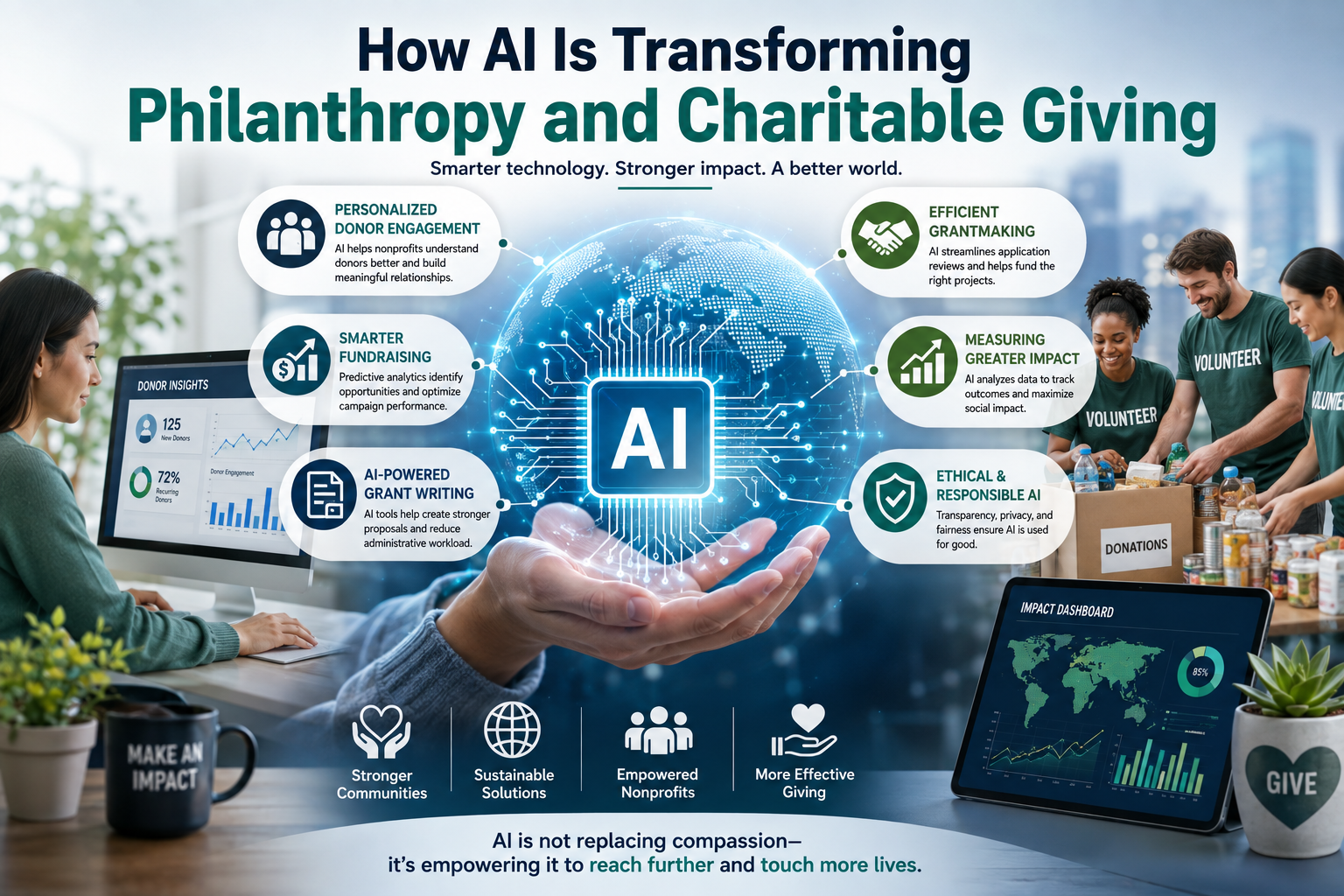
AI in Philanthropy and the Future of Charitable Giving - Artificial Intelligence (AI) is rapidly reshaping industries across the globe, and the philanthropic sector is no exception. Once viewed as a technology primarily for large corporations and tech companies, AI is now becoming an increasingly valuable tool for nonprofits, foundations, charities, and donors seeking to maximize their impact.
From personalized donor engagement and fundraising optimization to grant management and impact measurement, AI is helping organizations operate more efficiently and make better decisions. At the same time, the rise of AI raises important questions about ethics, transparency, privacy, and the role of human judgment in charitable work.
As philanthropy enters a more digital era, understanding how AI is transforming charitable giving has become essential for nonprofit leaders, donors, and social impact organizations.
What Is AI in Philanthropy?
AI in philanthropy refers to the use of artificial intelligence technologies to improve charitable giving, nonprofit operations, fundraising, grantmaking, and social impact initiatives.
These technologies include:
- Machine learning
- Natural language processing
- Predictive analytics
- Chatbots and virtual assistants
- Data mining
- Generative AI tools
Organizations are increasingly using AI to analyze large amounts of information, identify trends, automate routine tasks, and make more informed decisions. AI in Philanthropyis no longer just a future concept—it is already influencing how charities connect with donors and deliver their missions. Surveys show that AI adoption among nonprofits has accelerated dramatically in recent years. (The Center for Effective Philanthropy), and nonprofit management throughout the coming years. by helping charities target potential donors more effectively while reducing unnecessary outreach costs.
Personalized Donor Communication
Modern donors expect personalized experiences.
AI in Philanthropy can help charities create customized communications based on:
- Past giving history
- Interests and preferences
- Engagement behavior
- Geographic location
- Communication preferences
Organizations are increasingly using AI tools to tailor fundraising messages and strengthen donor relationships at scale.
Improving Grantmaking and Foundation Operations
Foundations and grantmaking organizations also benefit from AI.
Managing grant applications often requires reviewing large amounts of information. AI can help streamline this process by:
- Summarizing applications
- Identifying relevant proposals
- Detecting duplication
- Organizing applicant data
- Supporting due diligence efforts
Many philanthropic organizations are exploring AI as a way to improve efficiency while allowing staff to focus more time on strategic decision-making.
Importantly, most experts emphasize that AI should support—not replace—human judgment when making funding decisions.
AI in Philanthropy and Impact Measurement
Measuring social impact has always been one of the most challenging aspects of philanthropy.
Organizations often struggle to determine:
- Which programs are most effective
- How resources are being used
- What outcomes are being achieved
- Which interventions create lasting change
AI in Philanthropy can analyze large datasets from multiple sources to identify trends and evaluate program performance more efficiently.
Potential applications include:
- Predicting program outcomes
- Monitoring beneficiary engagement
- Evaluating intervention effectiveness
- Tracking long-term impact indicators
This enables nonprofits and donors to make more evidence-based decisions.
Enhancing Donor Research
Prospect research has traditionally required significant manual effort.
Fundraisers often spend hours gathering information about potential supporters.
AI can automate much of this work by:
- Analyzing public records
- Identifying giving patterns
- Mapping professional networks
- Creating donor profiles
- Highlighting engagement opportunities
Many nonprofit professionals believe AI in Philanthropy will significantly transform donor prospecting and wealth screening over the next decade.
This allows fundraising teams to focus more on relationship building and less on administrative research.
AI-Powered Grant Writing
Grant writing is another area where AI is creating new opportunities.
Nonprofits increasingly use generative AI tools to:
- Draft grant proposals
- Generate project summaries
- Improve language clarity
- Create supporting documentation
- Organize application materials
For smaller organizations with limited staff, AI can help reduce administrative burdens and increase productivity.
However, experts caution that human review remains essential to ensure accuracy, authenticity, and alignment with organizational goals.
AI for Social Impact
Beyond improving nonprofit operations, AI is increasingly being used to address social and environmental challenges directly.
Organizations are applying AI in areas such as:
- Healthcare access
- Disease detection
- Education
- Climate monitoring
- Disaster response
- Food security
Recent philanthropic initiatives have invested heavily in AI-driven research and public-interest applications designed to improve human well-being and address global challenges.
These efforts illustrate how philanthropy is not only using AI but also funding its development for social good.
Challenges and Ethical Concerns
Despite its potential, AI adoption in philanthropy raises important concerns.
Data Privacy
Nonprofits often manage sensitive information about donors, beneficiaries, and communities.
AI systems must be implemented carefully to ensure:
- Data protection
- Privacy compliance
- Secure information management
Poor governance can expose organizations to legal and reputational risks. (Reddit)
Bias and Fairness
AI systems can unintentionally reinforce existing biases if trained on incomplete or unrepresentative data.
Potential risks include:
- Biased grant recommendations
- Unequal resource allocation
- Exclusion of underrepresented communities
Many experts stress the importance of equitable AI practices within philanthropy.
Transparency
Stakeholders increasingly want to know how AI is being used in decision-making processes.
Some philanthropic organizations are already developing AI policies and disclosure practices to maintain trust and accountability.
Preserving Human Relationships
Fundraising and philanthropy are fundamentally relationship-driven activities.
While AI can improve efficiency, it cannot replace empathy, trust, and personal connections.
Industry leaders consistently emphasize that AI should augment human interaction rather than eliminate it.
Future Trends in AI and Philanthropy
Several trends are likely to shape the future of AI in charitable giving.
AI-Powered Donor Engagement
Virtual donor assistants and AI agents are becoming increasingly sophisticated and may play a larger role in personalized fundraising efforts.
Smarter Grantmaking
Foundations will likely use AI to improve grant evaluation, identify funding gaps, and allocate resources more strategically.
Greater Governance and Regulation
As AI adoption grows, nonprofits will need stronger policies covering transparency, ethics, and responsible use.
Increased Philanthropic Funding for AI
Donors and foundations are increasingly funding AI research and public-interest applications to ensure the technology benefits society broadly rather than serving only commercial interests. (Kiplinger)
Conclusion
Artificial intelligence is transforming philanthropy and charitable giving by helping organizations raise more funds, improve efficiency, personalize donor engagement, streamline grantmaking, and measure impact more effectively. From predictive fundraising and donor research to grant writing and social impact initiatives, AI is creating powerful new opportunities for nonprofits and foundations.
However, successful adoption requires more than technology alone. Organizations must address ethical concerns, protect privacy, ensure transparency, and maintain the human relationships that remain at the heart of philanthropy.
As AI continues to evolve, the most successful charities will likely be those that combine technological innovation with compassion, trust, and a clear commitment to their mission. When used responsibly, AI has the potential to help philanthropy become more effective, more inclusive, and more impactful than ever before.