What Is a Donor-Advised Fund and How Does It Work?
 Chinafoundations Team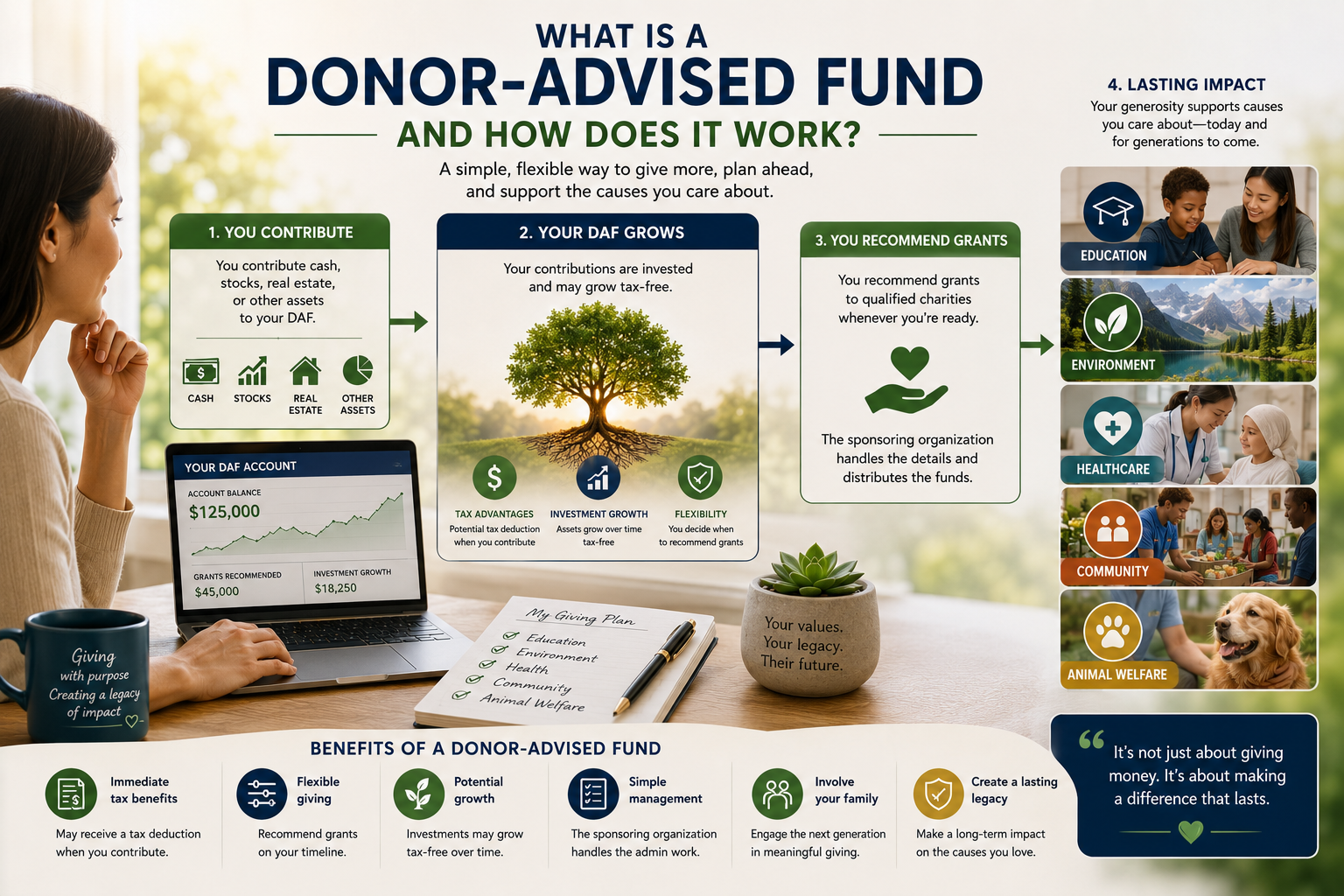
What Is a Donor-Advised Fund and How Does It Work? - Philanthropy has evolved significantly in recent decades, giving donors more options than ever to support the causes they care about. Among the most popular charitable giving tools today is the Donor-Advised Fund (DAF). Once used primarily by wealthy individuals and families, DAFs have become increasingly accessible and are now one of the fastest-growing vehicles for charitable giving.
A Donor-Advised Fund offers flexibility, simplicity, and potential tax advantages, making it an attractive option for people who want to make a meaningful charitable impact while maintaining a strategic approach to philanthropy.
This article explains what a Donor-Advised Fund is, how it works, its benefits and limitations, and why it has become such an important part of modern charitable giving.
What Is a Donor-Advised Fund?
A Donor-Advised Fund, commonly referred to as a DAF, is a charitable giving account established and managed by a sponsoring nonprofit organization.
When donors contribute money, stocks, or other assets to a DAF, they generally become eligible for applicable charitable tax benefits at the time of the contribution. The donated assets are then held within the fund, where they may be invested and potentially grow over time. Later, donors can recommend grants from the fund to qualified nonprofit organizations.
In simple terms, a Donor-Advised Fund acts as a charitable investment account that allows donors to separate the timing of their tax-deductible contributions from the timing of their charitable distributions.
Because of this flexibility, DAFs have become a popular tool for both occasional donors and individuals seeking a long-term philanthropic strategy.
How Does a Donor-Advised Fund Work?
The process is relatively straightforward and typically involves four main steps.
1. Open a Donor-Advised Fund Account
The first step is establishing a DAF through a sponsoring organization.
Common sponsors include:
- Community foundations
- National charitable organizations
- Financial institution-affiliated charities
- Religious charitable organizations
The sponsoring organization administers the account and ensures compliance with charitable regulations.
2. Make Contributions
Donors can contribute various types of assets, including:
- Cash
- Publicly traded stocks
- Mutual fund shares
- Real estate
- Private business interests
- Cryptocurrency (through some sponsors)
Once assets are contributed, they become irrevocable charitable donations. This means the donor can no longer reclaim them for personal use.
3. Invest the Assets
Unlike direct charitable donations, funds contributed to a DAF do not need to be distributed immediately.
Many sponsors allow donors to recommend investment options for the assets held within the account.
Potential investment growth can increase the amount available for future charitable grants, potentially expanding the donor's long-term impact.
4. Recommend Grants
When donors are ready, they can recommend grants to eligible nonprofit organizations.
The sponsoring organization reviews these recommendations and typically distributes funds to qualified charities.
This allows donors to support causes over many years without making new charitable contributions each time.
A Simple Example
Imagine Sarah receives a large bonus from her employer in 2026 and wants to make a charitable contribution while also planning her giving carefully.
She contributes $50,000 to a Donor-Advised Fund.
Immediately after contributing:
- The money is designated for charitable purposes.
- She may receive applicable tax benefits based on local laws.
- The assets can remain invested within the fund.
Over the next five years, Sarah recommends grants to:
- Environmental organizations
- Educational charities
- Animal welfare groups
- Community development programs
Instead of making multiple separate donations and administrative decisions each year, Sarah manages her philanthropy through one centralized account.
Why Are Donor-Advised Funds So Popular?
Several factors have contributed to the rapid growth of Donor-Advised Funds.
Simplicity
One of the biggest advantages of a DAF is convenience.
Rather than tracking receipts and donations to multiple organizations, donors can make a single contribution to their fund and manage future grants through one platform.
Administrative responsibilities are handled by the sponsoring organization.
Flexibility
Donors are not required to choose charities immediately after contributing.
They can take time to:
- Research organizations
- Evaluate causes
- Develop giving strategies
- Respond to emerging needs
This flexibility is particularly useful during years when income fluctuates significantly.
Potential Investment Growth
Assets held within a DAF can often be invested.
As investments potentially appreciate, donors may have more resources available for future grants.
This feature distinguishes DAFs from traditional charitable donations, where funds are typically distributed immediately.
Family Philanthropy
Many families use Donor-Advised Funds as a tool for teaching philanthropy across generations.
Parents often involve children and grandchildren in:
- Grant recommendations
- Charity evaluations
- Philanthropic discussions
- Long-term giving plans
This helps create a culture of charitable engagement within families.
Tax Advantages of Donor-Advised Funds
One reason DAFs have grown rapidly is their potential tax efficiency.
Immediate Charitable Deduction
In many jurisdictions, donors may receive charitable tax benefits when they contribute assets to a DAF rather than when grants are ultimately distributed.
This allows donors to:
- Make contributions during high-income years
- Plan charitable deductions strategically
- Separate tax planning from grant-making decisions
Donating Appreciated Assets
Many donors contribute appreciated securities such as stocks.
Benefits may include:
- Avoiding capital gains taxes on appreciated assets
- Receiving a charitable deduction based on the asset's value
- Increasing charitable resources available for grants
This can make DAFs particularly attractive for investors with significant unrealized gains.
Estate Planning Benefits
Some donors include Donor-Advised Funds as part of broader estate planning strategies.
In certain situations, charitable assets directed through DAFs may help support philanthropic goals while reducing the taxable value of an estate.
Because tax regulations vary significantly, professional financial and legal advice is always recommended.
Donor-Advised Funds vs. Private Foundations
Many people compare DAFs with private foundations.
While both support charitable giving, they differ significantly.
Donor-Advised Funds
Advantages include:
- Lower startup costs
- Minimal administration
- Simplified compliance requirements
- Faster setup
- Greater privacy
Private Foundations
Advantages include:
- Greater control over grant-making
- Ability to hire staff
- Independent governance
- Direct charitable program management
However, private foundations typically involve:
- Higher costs
- More paperwork
- Greater regulatory requirements
- Ongoing administrative responsibilities
For many donors, particularly those without extremely large charitable assets, a DAF offers a simpler alternative.
Potential Limitations of Donor-Advised Funds
While DAFs provide many benefits, they are not suitable for every situation.
Contributions Are Irrevocable
Once assets enter a Donor-Advised Fund, they generally cannot be returned to the donor.
The funds are permanently dedicated to charitable purposes.
Limited Control
Donors advise rather than control grant distributions.
Although sponsors typically follow donor recommendations, the sponsoring organization retains legal authority over final grant decisions.
Administrative Fees
Most DAF sponsors charge management and administrative fees.
These fees vary depending on:
- Account size
- Investment options
- Sponsor policies
Donors should review fee structures carefully before opening an account.
Grant Restrictions
DAF grants generally must go to qualified charitable organizations.
They cannot typically be used for:
- Personal expenses
- Political campaigns
- Certain non-charitable activities
Understanding these restrictions is important before establishing a fund.
Who Should Consider a Donor-Advised Fund?
DAFs may be particularly useful for individuals who:
- Experience unusually high-income years
- Want to donate appreciated assets
- Desire a long-term charitable strategy
- Support multiple nonprofit organizations
- Prefer simplified administration
- Wish to involve family members in philanthropy
They are often attractive to business owners, investors, retirees, and families seeking structured charitable planning.
The Growth of Donor-Advised Funds
Donor-Advised Funds have experienced remarkable growth over the past decade.
Several trends have fueled this expansion:
Increased Interest in Strategic Giving
Modern donors increasingly view philanthropy as a long-term strategy rather than a series of individual donations.
DAFs provide a framework for thoughtful, organized giving.
Digital Philanthropy
Many DAF sponsors now offer online platforms that allow donors to:
- Track investments
- Research charities
- Recommend grants
- Monitor giving history
Technology has made charitable management easier than ever.
Growing Wealth Transfer
Experts anticipate a significant transfer of wealth between generations in the coming decades.
Many families are using DAFs as tools for preserving charitable values and managing future philanthropic activities.
The Future of Donor-Advised Funds
As charitable giving continues to evolve, Donor-Advised Funds are likely to remain a central component of modern philanthropy.
Emerging trends include:
- Increased use of impact investing
- Expanded acceptance of alternative assets
- Greater focus on measurable outcomes
- Enhanced digital giving tools
- Multi-generational philanthropy planning
These developments may make DAFs even more attractive to donors seeking efficient and meaningful ways to support charitable causes.
Conclusion
A Donor-Advised Fund is a flexible and efficient charitable giving vehicle that allows donors to contribute assets, potentially receive immediate tax benefits, invest funds for future growth, and recommend grants to nonprofit organizations over time.
Its simplicity, flexibility, and strategic advantages have made it one of the fastest-growing tools in philanthropy. While DAFs are not appropriate for every donor, they offer an attractive option for individuals and families who want to maximize their charitable impact while maintaining a structured approach to giving.
As philanthropy becomes increasingly sophisticated, Donor-Advised Funds are likely to play an even larger role in helping donors create lasting legacies and support the causes they care about most.