Why CSR Initiatives Matter for Modern Businesses
 Chinafoundations Team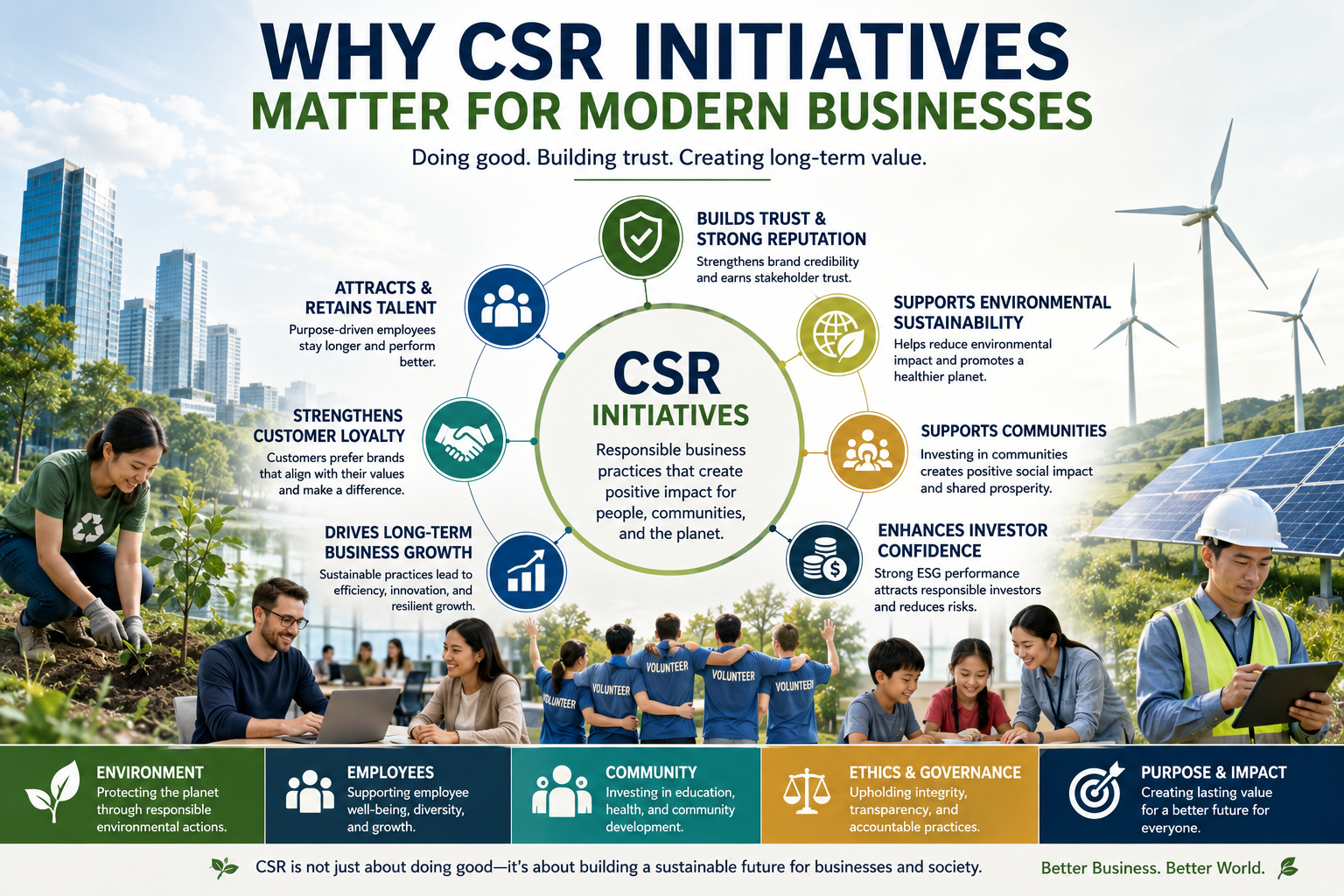
Why CSR Initiatives Matter for Modern Businesses - Corporate Social Responsibility (CSR) has evolved from a voluntary business practice into a strategic necessity for modern organizations. In today's business environment, companies are expected to do more than generate profits. Customers, employees, investors, and communities increasingly expect businesses to contribute positively to society while minimizing their environmental impact.
As a result, CSR initiatives have become a key component of corporate strategy across industries. From sustainability programs and community engagement projects to ethical labor practices and charitable giving, CSR helps businesses build trust, strengthen their reputation, and create long-term value.
This article explores what CSR initiatives are, why they matter for modern businesses, and how effective CSR programs benefit companies, stakeholders, and society as a whole.
What Are CSR Initiatives?
Corporate Social Responsibility (CSR) refers to actions and policies that businesses implement to operate in an ethical, sustainable, and socially responsible manner.
CSR initiatives are programs designed to address social, environmental, and economic challenges while supporting the company's mission and values.
Common examples include:
- Environmental sustainability programs
- Employee volunteer opportunities
- Charitable donations and philanthropy
- Diversity, equity, and inclusion initiatives
- Ethical sourcing practices
- Community development projects
- Educational partnerships
- Carbon reduction programs
Rather than focusing solely on financial performance, CSR encourages businesses to consider their broader impact on society and the environment.
The Evolution of CSR
Several decades ago, CSR was often viewed as a public relations activity or charitable effort separate from core business operations.
Today, the landscape has changed significantly.
Consumers are more informed than ever, and social media allows stakeholders to quickly assess a company's behavior. Environmental concerns, social justice issues, and corporate governance practices have become major factors influencing purchasing decisions and investment strategies.
As a result, CSR has evolved into an essential component of long-term business success.
Companies are increasingly integrating social responsibility into their business models rather than treating it as an optional activity.
Building Trust and Reputation
One of the most important reasons CSR initiatives matter is their ability to strengthen trust and corporate reputation.
Trust is one of the most valuable assets a company can possess. Customers are more likely to support businesses they believe act responsibly and contribute positively to society.
For example, companies that:
- Reduce environmental impact
- Support local communities
- Promote ethical labor standards
- Demonstrate transparency
often enjoy stronger public perception than those that neglect these responsibilities.
A positive reputation can lead to:
- Increased customer loyalty
- Better brand recognition
- Stronger stakeholder relationships
- Improved public support
In an increasingly competitive marketplace, reputation can be a significant differentiator.
Meeting Consumer Expectations
Modern consumers increasingly prefer brands that align with their personal values.
Many buyers consider factors such as sustainability, ethical sourcing, and social responsibility when making purchasing decisions.
Younger generations, particularly Millennials and Generation Z, often expect companies to address social and environmental issues actively.
Consumers are more likely to support businesses that:
- Use sustainable materials
- Reduce carbon emissions
- Support charitable causes
- Promote fair labor practices
- Demonstrate transparency
Companies that ignore these expectations risk losing customers to competitors with stronger CSR commitments.
Attracting and Retaining Talent
Employees are another important stakeholder group influenced by CSR initiatives.
Today's workforce increasingly seeks meaningful employment and wants to work for organizations that share their values.
Strong CSR programs can help companies:
- Attract top talent
- Improve employee satisfaction
- Increase retention rates
- Enhance workplace culture
- Boost employee engagement
When employees feel proud of their organization's social and environmental contributions, they often become more motivated and productive.
Volunteer programs, sustainability initiatives, and community involvement projects can also foster stronger connections between employees and employers.
Strengthening Customer Loyalty
Customer loyalty is closely linked to trust and shared values.
Consumers who believe a company genuinely cares about social and environmental issues are more likely to:
- Become repeat customers
- Recommend the brand to others
- Support the company during difficult periods
- Engage with the brand on social media
CSR initiatives create emotional connections that extend beyond products and services.
For example, a company supporting environmental conservation or educational programs may build stronger customer relationships because consumers feel their purchases contribute to a greater purpose.
Supporting Long-Term Business Growth
CSR is often viewed as a cost, but many organizations increasingly recognize it as an investment.
Effective CSR strategies can contribute to long-term growth by:
- Enhancing brand value
- Improving operational efficiency
- Reducing business risks
- Strengthening stakeholder relationships
- Creating new market opportunities
For instance, sustainability initiatives that reduce energy consumption or waste can lower operating costs while supporting environmental goals.
Similarly, ethical sourcing practices can improve supply chain resilience and reduce reputational risks.
Businesses that proactively address social and environmental challenges are often better prepared for future market changes.
Improving Investor Confidence
Investors are paying greater attention to environmental, social, and governance (ESG) factors when evaluating companies.
Many institutional investors now consider sustainability and CSR performance as indicators of long-term resilience and effective management.
Strong CSR programs may signal that a company:
- Manages risks responsibly
- Maintains ethical business practices
- Understands stakeholder expectations
- Is prepared for regulatory changes
As sustainable investing continues to grow, businesses with robust CSR initiatives may become more attractive to investors seeking long-term value.
Enhancing Community Relationships
Businesses do not operate in isolation.
Their success often depends on healthy relationships with local communities.
CSR initiatives can strengthen these relationships through:
- Educational programs
- Healthcare support
- Workforce development
- Infrastructure improvements
- Community partnerships
When companies invest in the communities where they operate, they help create positive social outcomes while building goodwill.
Strong community relationships can improve a company's social license to operate and reduce potential conflicts with stakeholders.
Addressing Environmental Challenges
Environmental sustainability has become one of the most visible areas of CSR.
Climate change, pollution, resource depletion, and biodiversity loss present significant challenges for businesses and society.
Many companies are implementing initiatives such as:
- Renewable energy adoption
- Carbon emission reduction
- Sustainable packaging
- Waste reduction programs
- Water conservation measures
These efforts not only contribute to environmental protection but can also improve operational efficiency and meet growing consumer demand for sustainable products.
As environmental regulations continue to evolve, proactive sustainability efforts can help businesses remain competitive.
Managing Risk More Effectively
CSR initiatives can play an important role in risk management.
Companies that neglect social or environmental responsibilities may face:
- Regulatory penalties
- Legal challenges
- Reputational damage
- Consumer boycotts
- Employee dissatisfaction
By identifying and addressing potential issues early, businesses can reduce exposure to these risks.
For example:
- Ethical supply chain monitoring can prevent labor violations.
- Environmental compliance programs can reduce regulatory risks.
- Diversity initiatives can support inclusive workplace cultures.
CSR helps organizations anticipate challenges before they become major problems.
Encouraging Innovation
CSR often drives innovation by encouraging companies to develop new products, services, and business models.
Examples include:
- Eco-friendly packaging solutions
- Renewable energy technologies
- Sustainable agriculture practices
- Circular economy initiatives
As companies seek to address environmental and social challenges, they frequently discover opportunities for growth and differentiation.
Innovation driven by CSR can create competitive advantages while delivering broader societal benefits.
Examples of Effective CSR Initiatives
Many leading companies have implemented successful CSR programs that demonstrate the potential benefits of responsible business practices.
Sustainability Programs
Organizations are investing heavily in reducing greenhouse gas emissions, increasing renewable energy usage, and improving resource efficiency.
Employee Volunteer Programs
Many businesses encourage employees to participate in community service activities during paid work hours.
Educational Partnerships
Companies often collaborate with schools, universities, and nonprofit organizations to support workforce development and educational opportunities.
Diversity and Inclusion Efforts
Businesses are increasingly focused on creating inclusive workplaces and promoting equal opportunities across all levels of the organization.
Philanthropic Giving
Corporate donations and charitable partnerships continue to support causes ranging from healthcare and education to disaster relief and environmental conservation.
Challenges in Implementing CSR
Despite its benefits, CSR implementation is not without challenges.
Organizations may face:
- Budget constraints
- Difficulty measuring impact
- Stakeholder expectations
- Regulatory complexity
- Concerns about greenwashing
To overcome these challenges, companies should ensure CSR initiatives are authentic, measurable, and aligned with business objectives.
Transparency and accountability are critical for maintaining credibility.
The Future of CSR
CSR is expected to become even more important in the coming years.
Several trends are shaping its future:
Greater ESG Integration
CSR and ESG strategies are increasingly connected as investors seek comprehensive sustainability information.
Increased Transparency
Stakeholders expect more detailed reporting on social and environmental performance.
Technology-Driven Sustainability
Artificial intelligence, data analytics, and digital monitoring tools are helping companies track and improve CSR outcomes.
Climate Action
Businesses are facing growing pressure to reduce emissions and support global climate goals.
Stakeholder Capitalism
Companies are increasingly adopting a broader view of success that includes employees, customers, communities, and the environment alongside shareholders.
Conclusion
CSR initiatives matter because they help businesses balance profitability with social and environmental responsibility. In today's interconnected world, stakeholders expect organizations to contribute positively to society while operating ethically and sustainably.
Effective CSR programs strengthen reputation, build trust, attract talent, improve customer loyalty, enhance investor confidence, and support long-term growth. They also help companies address environmental challenges, manage risks, foster innovation, and create stronger community relationships.
As consumer expectations, regulatory requirements, and sustainability concerns continue to evolve, CSR will remain a critical element of modern business strategy. Companies that embrace meaningful and authentic CSR initiatives are likely to be better positioned for long-term success while making a positive difference in the world.